



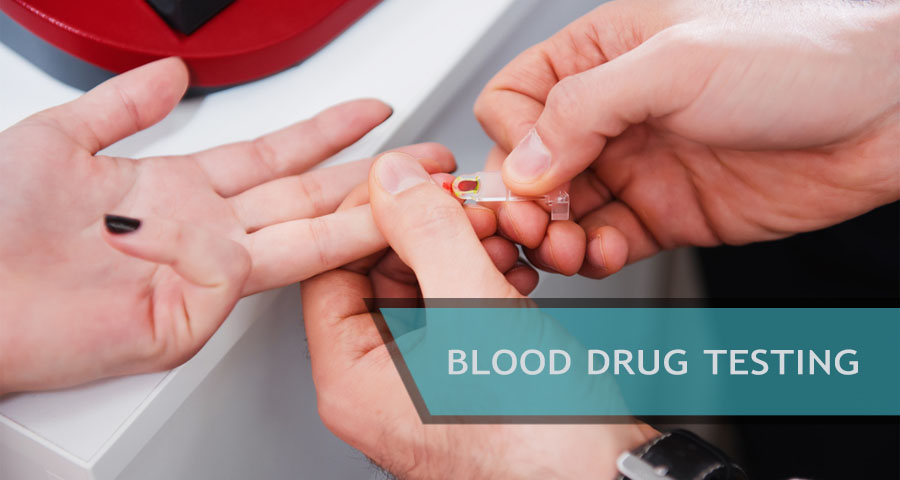
A blood drug test is a medical analysis of a plasma sample, usually extracted from a vein on the inside of the arm or the back of one’s palm with a needle or through a finger stick, to detect the use of illicit or controlled drugs. It produces the most accurate and reliable results.Unlike urine testing, blood tests help detect the parent drug’s presence and not its inactive metabolites.
- What Drugs Can be Detected by a Blood Test?
- Blood Testing Facts
- When Is Blood Drug Testing Required?
- How is the Test Taken?
Despite this, a plasma exam is neither always the first nor the best option. This post will discuss its disadvantages, when it is most beneficial to conduct, the detection window for different drugs, and how similar or different it is for detecting drugs in the saliva, hair, and urine.
Which Drugs Can be Detected in Plasma?
Based on the 2019 National Survey on Drug Use and Health released by the Substance Abuse and Mental Health Administration (SAMHSA), 165.4 million people reported substance use in the past month prior to data collection.
In a report made to SAMHSA by Quest Diagnostics, one of the largest workplace drug test providers, urine tests revealed that drug use among workers jumped by as much as 4.5% in 2018, the largest increment experienced in 16 years. The same report highlighted a more prevalent use of marijuana and a general decline in cocaine, heroin, and opiates abuse in the workforce. The lab also stressed rising attempts to cheat testing results as evidence of invalid specimens mount.
Although there is no available report presenting how many blood tests for drugs and alcohol are conducted relative to tests done using urine, hair, or saliva samples, it is clear that urine test is the type of exam routinely used to detect the presence of illicit substances in the system.
What Illicit Drugs Can Be Detected in a Plasma Sample?
A blood drug screen is quite unique compared to testing with other samples. Perhaps the most glaring difference is that using blood tests for screens will detect the actual substance that was taken. On the contrary, drug testing with other samples involves the detection of metabolites or broken down forms of illicit drugs, which often have a short half-life. Thus, it is difficult to detect in their original, undigested forms.
The drugs that can be detected in the plasma are listed below, which may be subsequently processed with a confirmation procedure to test for the presence of specific drugs enumerated in the corresponding column.
| Immunoassay Drug Test | Confirmatory Test |
| Amphetamines | Amphetamine, Methamphetamine, MDA, MDEA, MDMA |
| Barbiturates | Amobarbital, Butabarbital, Butalbital, Pentobarbital, Phenobarbital, Secobarbital |
| Benzodiazepines | 7-Aminoclonazepam, Alprazolam, Chlordiazepoxide, Clonazepam, Desalkylflurazepam, Desmethylchlordiazepoxide, Desmethyldiazepam, Diazepam, Flurazepam, Lorazepam, Midazolam, Oxazepam, Temazepam, Triazolam |
| Buprenorphine | Buprenorphine, Norbuprenorphine |
| Carisoprodol | Carisoprodol, Meprobamate |
| Cocaine | Cocaine, Benzoylecgonine |
| Fentanyl | Fentanyl, Norfentanyl |
| Gabapentin | Gabapentin |
| Meperidine | Meperidine, Normeperidine |
| Methadone | Methadone |
| Opiates | 6-Acetylmorphine, Codeine, Dihydrocodeine, Hydrocodone, Hydromorphone, Morphine |
| Oxycodones | Oxycodone, Oxymorphone |
| PCP (Phencyclidine) | Phencyclidine |
| Propoxyphene | Propoxyphene, Norpropoxyphene |
| Tramadol | Tramadol, O-Desmethyltramadol |
| THC (marijuana / cannabis) | Tetrahydrocannabinol (THC), Carboxy-THC, Hydroxy-THC, Cannabinol, Cannabidiol |
Blood Drug Test Detection Times
Drug detection for most abuse drugs can be detected in the blood, even in amounts as little as a nanogram per milliliter within a one-hour up to 48-hour window period.
Blood Test for Drugs and Alcohol: Pros and Cons
If administered during the detection window, plasma screening is the most accurate approach for detecting drugs. If it is the most reliable drug test, why isn’t it always the prescribed method?
Listed below are key advantages and disadvantages of using a blood test for the screening:
Pros:
Here are the advantages of using a plasma sample for drug testing:
- It can detect drugs that have entered the system within a few hours of ingestion.
- Results are almost immediate, available within one to a few hours compared to urine tests that may take days up to a week to become available.
- It is harder to tamper with the sample because an attending healthcare provider will be present when it is drawn, unlike with urine samples where an individual is permitted to collect on his or her own.
- Utilizes highly established lab tests.
- A confirmatory test can be run subsequently to a bioassay when it is important to know the exact profile of the tested substance.
Cons:
Despite the clear advantages, a blood drug screen test is seldom required. Here’s why:
- It is invasive
- It is more expensive
- This testing has a very short detection window for almost all drugs. The extraction and testing need to be completed between 2 up to 12 hours from ingestion of drugs.
- There is a higher risk of infection due to extraction.
When is a Blood Test Required?
Blood drug testing is required for people who are applying for insurance for potential employees applying for jobs, and in some cases, blood tests are required as part of a court order.
As mentioned earlier, this type of testing is not very common and is only required when significant amounts of money, or the law, are involved. There are, however, certain cases where blood drug testing might be required.
In some situations, routine testing using a urine sample may not be accepted, or a blood drug test may be more preferred. These exceptions are detailed below.
When a Person is Currently Under the Influence of Alcohol or Drugs
If there is a compelling reason to test a person who is showing signs and symptoms of intoxication at the time of testing, a drug blood test may be performed to obtain immediate results.
During a Medical Emergency
A blood drug test becomes particularly important when a patient is believed to have overdosed on illicit drugs or is exhibiting overdose signs. The test will be used to confirm the type of drug ingested and measure the level of concentration and toxicity.
The results of a test will inform the course of treatment that will be prescribed to the patient. This will become helpful most especially, when detox and medication-assisted treatment is under consideration.
In some cases and depending on the substance taken, the attending physician may also order repeat tests to monitor if concentration levels are still increasing and if the patient is responding well to treatment.
When Establishing the Cause of Death
If there is reason to believe that an incident resulted in death, a blood drug test may be ordered as part of a forensic investigation.
The results may also serve other legal purposes, such as for insurance claims, when there is suspicion that an accident or injury is caused by substance intoxication. Insurance companies can require a blood drug test when people contact a company and apply for an insurance policy.
When an Employer Requires it
According to the law, employers may require their employees to undergo routine or random drug testing. The recommended standard test will be used to detect marijuana and cocaine. Although, government guidelines also give the employers the prerogative to test for amphetamines, opiates, and phencyclidine (PCP) if preferred. Any institution may test for other drugs but only after securing the Department of Health and Human Services’ approval.
Blood drug testing is more commonly conducted by companies operating in certain industries where public safety is a major concern. That includes workers in the transport and defense industry, as well as first-responders.
To Comply with Anti-Doping Rules of Athletic Associations
College and professional sports associations have set rules to ensure that athletes participating in their respective events are “clean”. To guarantee this, athletes are required to undergo urine or plasma testing or both, depending on guidelines set by the respective sports associations where they belong to
To Comply with a Court Order
In rare cases, a blood test for alcohol and drugs may be performed to comply with the court’s instruction. However, because of the high risk of infection, this blood is rarely used as a sample. In the case of alcohol, its concentration is higher in urine, which makes it the preferred sample to test.
Passing a Blood Test
Blood testing drugs can lead to three different outcomes. The first may come up as a failed test, for which there are several reasons, the most common being that the sample may be insufficient, dated, contaminated, or tampered with. In which case, the subject may be asked to collect and submit a new sample.
If the test was successful, the information collected might come up as a positive or a negative result. This will indicate the presence or absence of drugs of abuse in the system. In positive cases, a confirmatory test will be conducted prior to releasing the result.
Several Factors May Contribute to a False Positive or Negative Outcome, Such as:
- Reaction with other medications taken for clinically diagnosed conditions
- How recent was the last dose taken
- Frequency of drug and alcohol use
- Type of substance being examined
- The concentration of the substance inside the body at the time of specimen collection
- Body mass
- Physical activity or lack thereof
- Age
In the case of using this type of testing for THC, however, it is generally considered more sensitive to the substance’s presence in the body compared to urine. For most other drugs, an immunoassay result is sufficiently accurate.
When properly administered and privacy is guaranteed, drug testing can help facilitate treatment for addiction. In turn, drug abuse’s health and economic repercussions may also be diminished from the individual to household, workplace, and community levels.

Published on:
Updated on: