




The dry drunk syndrome may sound like an oxymoron, but this syndrome is genuine and is more common than one might think. The term “dry drunk” is used to describe a person who has stayed away from alcohol for some time but continues to behave as if he or she is still addicted. A person who has dry drunk syndrome hasn’t made behavioral or emotional changes or has started to regress to old ways of thinking. If not appropriately managed, Dry drunk syndrome can easily trigger a relapse. In some instances, untreated, the dry drunk syndrome can lead to suicide.
Whether a loved one has the dry drunk syndrome, take heart in the fact that the condition can be cured. Developing dry drunk syndrome does not mean that anyone has lost their chance at sobriety. It only means that there is a need to get back on the right track.
Dry Drunk Syndrome Overview
Alcohol affects the body in different ways. Dry drunk symptoms are largely behavioral. One might start to exhibit a low tolerance for stress or behave impulsively, repeatedly engaging in unhealthy or risky behaviors. One might even start romanticizing alcohol or getting nostalgic about the “good old” drinking days. Such an attitude may become constantly negative, and the person will lose interest in previously cherished activities and become consumed with negative thoughts or self-pity. It may be hard to recognize that anything needs to be changed. Such a person feels miserable in their skin.
Dry drunk syndrome is usually caused by no longer focusing on mental or emotional recovery. One may start to believe that since they are no longer an alcoholic, there isn’t anything else that needs to be done, but suddenly it can be found that one isn’t able to brush off negative thoughts. One may resist completing all the modules of the rehab program and stop regularly attending alcohol support group meetings.
Dry drunk syndrome can be avoided by treating the core issues of alcoholism. Be aware of and on the lookout for the symptoms that indicate slipping back into old ways of thinking. If one hasn’t undergone behavioral therapy or counseling that targets people who abused alcohol, it is advised to enroll in such a program. Join a support group of either 12-step or a non-12-step recovery and adjust the expectations of what “recovery” is.
Symptoms of Dry Drunk Syndrome
Learn to recognize the signs of the dry drunk syndrome; don’t mistake them for moodiness, or think that a loved one is just difficult.
The following are the classic symptoms of Dry Drunk Syndrome:
Exhibiting low tolerance for stress: The individual has an abnormally low tolerance for stress. He or she flies off the handle or is upset at even the average daily stressors that most other people can deal with without becoming agitated.
- Displaying impulsivity: Low tolerance for stress can manifest as impatience and impulsive behavior. During his or her drinking days, a person was accustomed to instant gratification. Now when things don’t go the way he or she had planned or hoped for, stress kicks in. The person acts with little or no regard for the harm his or her behavior might unleash.
- Engaging repeatedly in unhealthy or risky behaviors: The individual may have given up alcohol but still turns to other substances of abuse to cope with stress.
- Romanticizing alcohol or getting nostalgic about the “good old” drinking days: Forgotten are the brushes with the law. Forgotten are the broken relationships. The person now only remembers what was good about his or her drinking days. In many cases, a person on recovery who is feeling nostalgic about alcohol is just a step away from a relapse.
- Showing a lack of interest in previously cherished activities: It is expected that with alcohol out of the way, the person in recovery will show increased enthusiasm for the activities he or she once used to enjoy. But people suffering from dry drunk syndrome lose interest in the activities they once used to enjoy. It seems as if they have lost the willingness or will to rebuild their lives.
- Harboring negative thoughts: This is one of the classic symptoms of dry drunk syndrome. Dry drunks tend to harbor negative thoughts about themselves, the people around them, and the events unfolding in their lives. They think they are no good because they have failed to “recover.” They believe alcohol rehab programs are a waste of time because they have ended up being miserable. Negativity breeds stress that, in turn, magnifies the symptoms of the dry drunk syndrome.
- Displaying self-pity: A person harbors feelings of discontentment with the way his or her life is shaping up. Self-pity is one of the most worrying symptoms of dry drunk syndrome. Feeling low and feeling helpless at being unable to chart the course of his or her life can drive a person to depression or worse, suicide.
- Denying that life needs to change: An individual sith substance use disorder on recovery is as prone to denying the futility of his or her current situation as a practicing addict. The person refuses to accept that he or she is stuck in recovery and needs to do some inner work to change the status quo.
Causes of Dry Drunk Syndrome
Before one delves into the origins of Dry Drunk Syndrome, here’s what one should know about the nature of alcohol addiction:
- Alcohol abuse and alcoholism are behavioral disorders.
- In many cases, alcohol abuse stems from unhealthy coping mechanisms.
- Behavioral modification is critical for sustained sobriety.
- Quitting alcohol usually only resolves the chemical dependency issues.
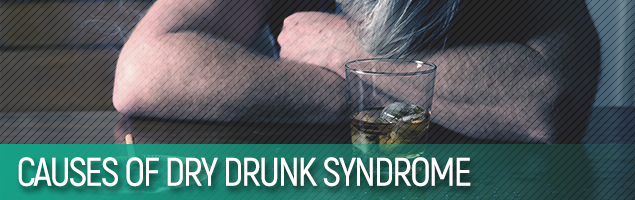
When one understands the nature of alcohol addiction and how it affects the individual’s mind, it is easy to make sense of why dry drunk syndrome develops.
The following are the most common causes of the dry drunk syndrome:
- Not being able to alter behavioral responses: For many patients on recovery, drinking was a way of coping with the stresses in their lives. Alcohol used to relax and de-stress them. If these people do not learn alternative healthy coping mechanisms, they will naturally fall back to their old ways. They respond to stress by reaching out for a drink because that’s how they have “learned” to cope.
- Not being able to brush off negative thoughts: Learning not to react impulsively to negative thoughts and feelings is an integral lesson of behavioral therapy. During these sessions, people on recovery are taught how to tide over negative thoughts and feelings that the stresses of daily living almost inevitably bring on. If they are not able to cope with negativity healthily, they feel compelled to reach out for a drink. But they know that they are not supposed to drink, so the stress magnifies.
- Returning to a life filled with stressors: For many people with substance use disorder on recovery, the expectation after going through an alcohol rehab program is that they will return to their earlier “normal” lives and function independently and efficiently without drinking. But the “normal” life they had once led is probably still filled with those stressors that had triggered their addiction in the first place. With their coping mechanism not in place, it is not hard to understand why some people start to romanticize their drinking days.
- Not completing all the modules of the rehab program: Comprehensive rehab programs include intensive counseling and therapy sessions that help abusers alter attitudes, beliefs, and behavioral responses. Not completing all the modules means that the person has had no chance of doing the inner work that would have prepared him or her to cope with the stressors that prompted alcohol dependency in the first place.
- Not attending alcohol support group meetings: Attending alcohol support group meetings regularly, even after leaving rehab, has been proven to prolong sobriety for as long as 16 years. These meetings create opportunities for those on recovery to interact with those who have traveled along the same path and learn tips and tricks for staying sober from them. The interactions provide the much-needed emotional support and guidance that go a long way in helping a person identify and alter unhealthy behavioral responses.
- Harboring unrealistic assumptions about recovery: Sobriety is not just a destination to arrive at after quitting alcohol, going through detoxification, and attending a rehab program; sobriety is a lifelong journey. But not many people realize this. The belief is that once they have quit drinking or completed rehab, there will be an improvement in all the currencies of their lives. So when this doesn’t happen or happens too slowly, discouragement, frustration, and depression set in.
Avoiding Dry Drunk Syndrome
A “dry drunk” refers to a person—someone who once abused alcohol—who has not consumed alcohol for some time but still exhibits the mental and emotional symptoms of alcoholism.
The dry drunk syndrome is the result of one of the following two behavioral changes:
- The person may have stopped using alcohol but has not worked on his or her mindset. His or her emotional landscape remains unchanged.
- The person is abstaining from alcohol but is regressing in recovery. The typical behavior in such cases is missing or not attending support group meetings and not keeping in touch with his or her sponsor. Regression also means reverting to the old ways of thinking like, “One drink is okay.”
One can prevent it in the following ways:
- Be aware of and on the lookout for the symptoms. The sooner one spots them, the earlier one can stem the downward spiral that can eventually trigger a relapse.
- If one has not undergone behavioral therapy or counseling that targets people who abused alcohol, consider enrolling in a program.
- Join a 12-step or a non-12-step program to learn tips and tricks from people who have overcome the obstacles that an ex-alcoholic may be facing now. Participation in these programs also ensures that it is necessary to have role models to look up and examples to follow.
- Adjust the expectations of what “recovery” is. Remember that recovery is a commitment to a life that one has to work at continuously. If there is a feeling of being stuck, it’s a signal that something is not going right. One has to correct the course.
Dry Drunk Syndrome is also known as “untreated alcoholism” in some 12-step circles. The moniker is not entirely unfounded. In a way, the symptoms of dry drunk syndrome mimic the emotional and mental states of an alcoholic. The cure is to take part in a behavioral counseling program and to reactivate the commitment to recovery.
When a person experiences dry drunk behavior patterns, the way to get back on track is to do what is supposed to be done. Only by asking for help and sticking close to others in recovery person can get fully back on the road to recovery.

Published on:
Updated on: