




Duloxetine side effects include nausea, dry mouth, constipation, diarrhea, difficulty sleeping, fatigue, and potential withdrawal symptoms when discontinuing the medication.
Short-term dangers involve increased risk of suicidal thoughts particularly during the first weeks of treatment, requiring close monitoring of patients.
Long-term dangers encompass persistent headaches, muscle cramps, decreased sexual interest, psychological dependence, and potential liver damage even at low doses.
The medication affects various body systems, with gastrointestinal issues appearing in many patients, while some experience skin reactions ranging from mild rashes to severe conditions like Stevens-Johnson Syndrome. Blood pressure elevation poses additional risks, especially for patients with hypertension, necessitating careful consideration before beginning treatment with this antidepressant. Medical supervision remains essential throughout the course of Duloxetine therapy to mitigate these potential dangers.
Common Cymbalta Side Effects
The severity of Duloxetine side effects and for how long they last depend on many individual factors. In an otherwise healthy person who uses Duloxetine for depression disorder treatment, the reactions are generally short-term. Some patients have an increased risk of side effects of Duloxetine than others, depending on their body composition. That aside, there have been some Cymbalta side effects on women’s health and sexual adverse reactions. There is discretion advised for Duloxetine and breastfeeding and taking it as a treatment during pregnancy. Expectant mothers and new mothers are advised to discuss using the drug with their medical health professional or the physician in charge of their treatment before taking the first dose.
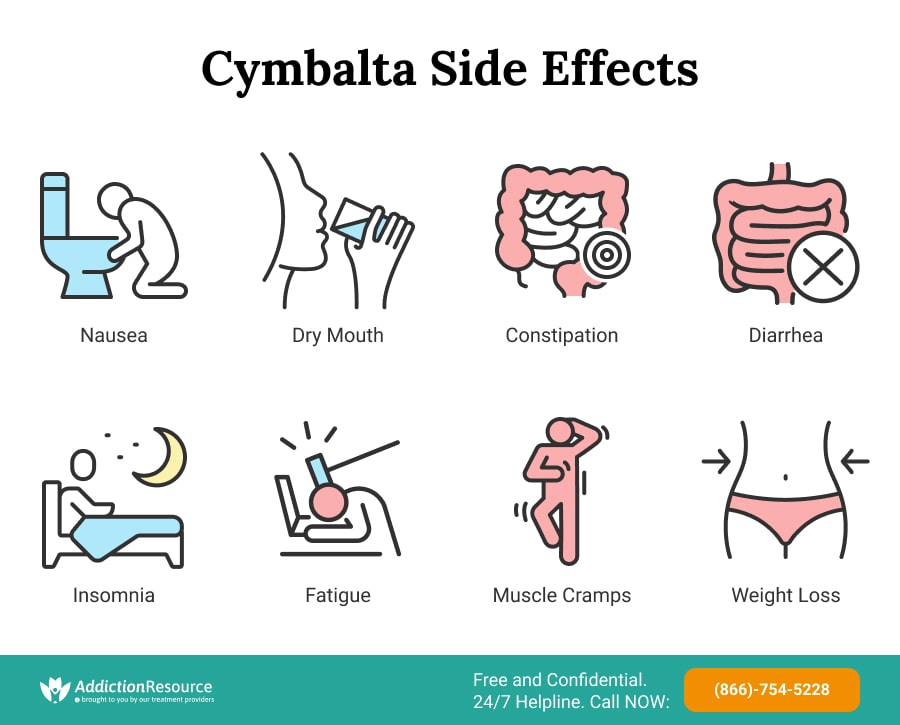
Common Cymbalta Side Effects Include:
- Nausea
- Dry mouth
- Constipation
- Diarrhea
- Difficulty sleeping
- Discontinuation syndrome and Cymbalta withdrawal symptoms
- Fatigue
Long-Term Side Effects Of Cymbalta
Patients who have to use Cymbalta for months frequently wonder how long the side effects of Duloxetine last. The antidepressant rarely results in any long-term symptoms. However, in certain cases, Cymbalta can cause weight gain and weakness that doesn’t go away.
Long-Term Side Effects of Cymbalta Might Include:
- Frequent headaches
- Muscle cramps
- Poor appetite and weight loss
- Feeling less interested in sex
- Psychological dependence
Cymbalta And Suicidal Thoughts
The tendency to cause suicidal behaviors is one of the most dangerous aftereffects of Cymbalta. This property is not exclusive to this drug and is displayed by many antidepressants. They can sometimes make depression and anxiety disorder worse. According to Duloxetine warnings, patients should be monitored closely during the first weeks of treatment to ensure there aren’t increased suicidal thoughts.

There is also a link between Duloxetine and suicide when patients change the dose or stop taking the medication without supervision. Therefore, if suicidal thoughts are frequent, it’s advisable to get help in the drug facilities.
Does Cymbalta Cause Hair Loss?
One of the most surprising and frustrating Duloxetine side effects is hair loss. Patients rarely expect it because it is not officially listed as a side effect of Duloxetine. So when it happens, the lack of information makes them think it’s caused by something else. However, hair loss on the drug has been reported by many individuals. Although the hair loss isn’t usually too significant, the symptom usually goes away after the dose is reduced. Talk to the doctor about adjusting the course of treatment if substantial hair loss is noticed. General hair loss that increased during treatment may stabilize once the patient is used to taking the drug or once the dose is adjusted.
Cymbalta And Blood Pressure
According to Duloxetine warnings, particular caution is advised to patients with hypertension disorder since Cymbalta and high blood pressure don’t go well together. Duloxetine might raise blood pressure and cause dizziness, especially in combination with other drugs. In addition, if a person is experiencing lightheadedness or blurred vision, they should contact a doctor as soon as possible and discuss alternatives to Duloxetine.
Duloxetine And Liver Damage
Among the most well-known Duloxetine side effects is its propensity to cause liver damage. The connection between Cymbalta and liver problems is a significant issue that poses a threat to many patients. The drug can cause fatty liver disease and liver injury. Even low Cymbalta doses can result in liver damage, especially in combination with other medications. The 2011 study included seven patients that were suspected of having Duloxetine hepatotoxicity. It was found that almost all of the patients showed varying extents of liver damage after taking the drug for over two months.
Gastrointestinal Effects
Problems with the digestive system are common reactions to antidepressants like Duloxetine.
However, the Majority of Them Are Not Severe and Don’t Require Treatment:
- Nausea. 23% of patients have reported experiencing nausea while on Duloxetine.
- Diarrhea. Diarrhea is experienced by approximately 9% of patients. Contact a doctor if it lasts for more than two days.
- Constipation. Constipation is another common side effect of the drug. It is present in 9% of patients.
- Loss of appetite. Approximately 7% of patients on the drug report decreased appetite.
- Stomach pain. Upper right stomach pain can indicate serious liver problems. Contact a doctor as soon as possible.
- Vomiting. Vomiting might occur as a withdrawal symptom or point to a more significant problem.
Skin Reactions
While taking drugs like Duloxetine, there’s a chance that the patient might have an allergic reaction. The reaction can be mild, limited to a rash, and they can also be on the severe side with the risk of erythema multiforme and Stevens-Johnson Syndrome (SJS). Patients should have all the information regarding the risk of skin reactions. If they experience peeling of the skin or blisters, it’s a sign that the effects may worsen and cause pain.

If that begins to happen, they should relay the information to their medical health professional in charge immediately so the doctor can adjust the dose accordingly for the patient’s safety.
Serotonin Syndrome
Humans need a certain amount of serotonin in the brain to be able to function normally. Antidepressants tend to alter the serotonin levels in the body by causing an increase. Although serotonin is usually “good” for the patient, an increased amount can be dangerous. The excess of serotonin in a person’s body is called “serotonin syndrome,” when there’s too much serotonin in the body, the nerve cell activity can become so rapid that it causes damage to the patient instead of helping. Cymbalta is one of those drugs that can cause serotonin syndrome if the correct dose isn’t taken or it is mixed with another drug that can interact with it, putting the patient’s safety at risk. That is why it’s vital that the patient has the correct dosage information and has complete information of every drug it can potentially interact with.
Serotonin Syndrome Common Symptoms Include:
- Headaches
- Nausea
- Confusion
- Vomiting
- Sudden increase in heart rate
- Tremors or loss of muscle control
- Shivering
- Sweating and cold sweats
If a patient is experiencing any of the symptoms of serotonin syndrome, they need to rush to an emergency room to seek emergency medical care before things get too dangerous.
How To Avoid Or Reduce Adverse Reactions
Some patients cherish how the medication makes them feel and don’t want to switch to a different one, even after experiencing negative symptoms. In this case, it is necessary to learn how to reduce and manage Cymbalta effects.

Many of the symptoms occur after an abrupt change in the course of treatment. Weaning off Cymbalta successfully requires a person to lower the dose gradually and carefully. Don’t stop Duloxetine without discussing it with a doctor.
In addition, one shouldn’t drink on Cymbalta, and it is a good idea to avoid substances like caffeine that can increase anxiety, irritability, and agitation.
Duloxetine Side Effects And Medical Help
In the majority of cases, Duloxetine adverse reactions don’t outweigh its benefits. Common symptoms are nausea, fatigue, and dry mouth. The long-term effects of Cymbalta mainly affect a person’s mental health. The adverse effects of the antidepressant usually go away on their own after a few days. However, if the negative symptoms persist or cause significant distress, contact a doctor immediately. Experiencing severe symptoms for an extended period can be caused by medication misuse. In this case, it is critical to find proper substance abuse treatment.

Published on:
Updated on: