




Diphenhydramine, the active compound found in over-the-counter Benadryl, is a first-generation antihistamine primarily used to treat seasonal allergy symptoms such as sneezing, as well as itching and watering of the eyes, nose, or throat. However, due to its mechanism of action, and the time Benadryl stays in the system, it can have other less desired effects on health.
These effects can be particularly undesirable for some subset of patients, such as those women who are pregnant or breastfeeding. Read further to find out more information about various Diphenhydramine side effects and warnings, and how they can be managed and minimized, as well as whether or not Diphenhydramine can be used in special populations, such as pregnant women and women who are breastfeeding.
Diphenhydramine Side Effects
Diphenhydramine(DPH), is the active compound found in Benadryl. In addition to its antihistamine activity used to alleviate symptoms and signs of seasonal allergy, it also has potent anticholinergic action. Anticholinergic, means that DPH blocks the effects of acetylcholine. Acetylcholine is a neurotransmitter found within our Autonomic Nervous System, neuromuscular junctions, and at various sites within the Central Nervous System. It is the anticholinergic property of this medication that most of the undesirable Diphenhydramine side effects can be attributed to.
There are numerous Benadryl side effects, that a person may experience because of diphenhydramine overdose, or due to drug intolerance. However, as Benadryl is an over-the-counter medication that is not specifically regulated by the U.S Food and Drug Administration(FDA), accurate statistical information regarding Benadryl side effects is lacking. Regardless, information still exists from various organizations, but the incidence rate is unfortunately unavailable.
Mild Benadryl Side Effects
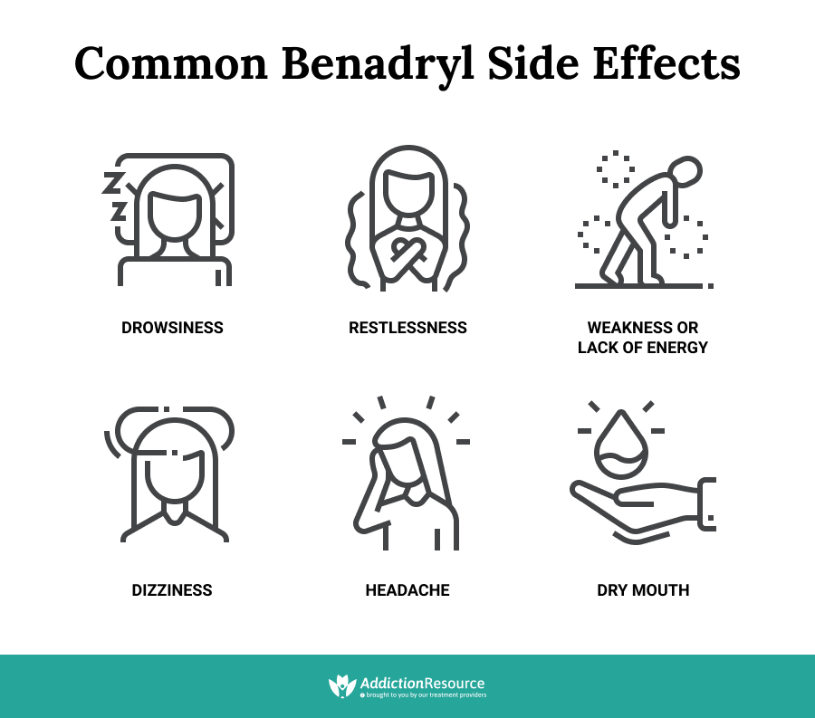
The Most Commonly Encountered Mild Reactions, Of Which the Statistics Are Known, Include:
- Drowsiness ~22%
- Restlessness ~1.0-10.0%
- Weakness or Lack of energy ~4.4%
- Dizziness ~2.5%
- Headache ~2.5%
- Dry mouth ~4.9%
Patients have also self-reported the following symptoms, but their incidence and prevalence rates with DPH use are unknown, thus making it difficult to establish a true causal relationship between medication use and their emergence. Nonetheless, they merit a mention:
- Irritability
- Insomnia
- Tinnitus and Vertigo
- Paresthesias
- Abdominal pain and diarrhea
- Increased appetite and weight gain
- Increased urinary frequency
- Double vision, Dilation of pupils, and Dry eyes
- Rash and Urticaria
- Increased sweating
- Chills
- Photosensitivity
- Nasal congestions
Moderate and Severe Benadryl Side Effects
If patients are using Benadryl for an allergic reaction, and experience any of the following moderate to severe Benadryl side effects they should consult their medical doctor or contact emergency medical services to minimize injury to their health:
- Contact and Atopic dermatitis ~1.0-10.0%
- Confusion
- Difficulty speaking
- Euphoria
- Neuritis
- Constipation
- Blurred vision
- Urinary retention
- Low platelet/thrombocyte count
- Wheezing
- Seizures
- Anaphylactic shock
- Hemolytic anemia
- Agranulocytosis
Effects of Long-Term Diphenhydramine Use
The information regarding the effects of prolonged Benadryl use is once again not known, as prospective studies analyzing its prolonged use do not exist. There are some exceptions to the above statement, however, the following are related to the long-term use of any antihistamine medication and anticholinergic drugs, not just DPH.
- The prolonged use of some antihistamine drugs has rarely been linked with mild and self-limiting clinically apparent liver injury.
- Anticholinergic drugs have been linked with the development of dementia. Therefore, anticholinergic properties of Diphenhydramine, especially with chronic use, could predispose individuals to impaired memory and cognition problems.
One study reported a positive association between chronic antihistamine use and the risk of developing malignant gliomas, which are the most common primary brain tumors in adults.
Use Of Benadryl While Pregnant
Allergies are pretty common during pregnancy. It is reported that 20-30% of women who are of childbearing age are affected by allergies, and in a subset of women, pregnancy can even aggravate some preexisting allergy symptoms such as allergic rhinitis. As a result, antihistamine drugs are often employed to treat these allergic symptoms. This gives birth to a question of whether the use of antihistamines or specifically Benadryl while pregnant is safe?
Although alternative methods, such as fluids and rest, should be attempted first to treat the symptoms of allergies during pregnancy. First-generation antihistamines like Diphenhydramine are drugs of choice, especially during the first trimester, for the relief of allergy symptoms in pregnant women. The U.S. Food and Drug Administration lists Benadryl as category B, which means that the drug has failed to demonstrate a risk of birth defects or congenital anomalies to the fetus in animal reproduction studies but there are no adequate and well-controlled studies in pregnant women, OR, animal studies have shown adverse effects, but adequate and well-controlled studies in pregnant women have failed to demonstrate a risk of birth defects or anomalies to the fetus in any trimester.
Thus, the short-term use of Benadryl while pregnant under the supervision of a qualified medical doctor is relatively safe. However, it is not recommended to use Benadryl during the last trimester of pregnancy, due to the possible risk of developing fetal ocular birth defects associated with the proliferation of fibrous tissue immediately behind the lens of the eye, leading to blindness. Due to this, during the last trimester of pregnancy, the American College of Obstetrics and Gynecology suggests substitution with a newer generation of antihistamine such as Loratadine, or any other diphenhydramine alternatives.
Benadryl While Breastfeeding
The current data suggest that first-generation antihistamines, like Diphenhydramine, are minimally excreted in breast milk. As such, a short-term or occasional combination of Benadryl and breastfeeding, would not be expected to cause any effects in breast-fed infants. Regardless, the overall or regular combination of Benadryl and breastfeeding is not recommended, as some mothers reported irritability, drowsiness, and unusual excitement in their infants after the use of antihistamines. Thus, it is preferable that alternatives, such as loratadine, be considered if symptomatic relief is required. As always, a physician should always be consulted and the need for DPH use should be weighed against the risk of development of Benadryl side effects in infants and the benefits of breastfeeding.

Diphenhydramine Warnings And Precautions
Due to potent anticholinergic properties, there are several health-related Diphenhydramine warnings and precautions patients should be aware of before using it. Furthermore a person should always consider dangers of Benadryl interaction with other drugs.
Asthma and Chronic Obstructive Pulmonary Disease (COPD)
Benadryl is relatively contraindicated in patients with asthma or Chronic Obstructive Pulmonary Disease (COPD). DPH’s anticholinergic activity can thicken secretions in the respiratory tract and worsen acute asthmatic attacks or COPD.
Pediatric Use of Diphenhydramine
As per the FDA, non-prescription allergy or cold medications containing Diphenhydramine should not be used in children less than 6 years of age due to the possibility of causing paradoxical CNS stimulation or seizures.
Geriatric Use
Diphenhydramine should not be used in the elderly as they are particularly susceptible to its anticholinergic properties and the associated adverse health effects( falls, cognitive dysfunction, delirium, loss of independence), their clearance of DPH is lowered, and the risk of drug-to-drug reactions is particularly high.
Closed-Angle Glaucoma and Increased Intraocular Pressure
The anticholinergic properties of Diphenhydramine can increase intraocular pressure and precipitate an acute attack of glaucoma. Thus patients with already existent glaucoma or elderly patients already predisposed to increased intraocular pressure should avoid DPH.
Bladder Obstruction, Urinary Retention, GI obstruction, Ileus, Prostatic Hypertrophy
Patients with bladder obstruction, urinary retention, gastrointestinal obstruction, or benign prostatic hypertrophy should avoid Diphenhydramine use, as its anticholinergic properties can worsen these conditions and cause detrimental effects on the patient’s health.
Liver Disease
Metabolism of Diphenhydramine primarily occurs hepatically. Thus patients who have liver disease, may not be able to metabolize DPH leading to its accumulation and development of toxicity. Therefore, a dosage reduction may be needed.
Driving or operating machinery
As always patients should not drive or operate machinery until they know how the drug affects them or its effects have worn off.
Minimizing Adverse Reactions of Diphenhydramine
Certain adverse reactions of Benadryl may affect the normal routines of patients. There are a few ways these undesirable effects can be minimized and managed so that patients can continue with their day-to-day activities in an efficient manner. The following tips can help in managing with them:
- Do not consume Benadryl and alcohol together, as this will worsen the adverse reactions of the drug.
- Avoid taking multiple agents that have anticholinergic properties together.
- Lower the dosage of Benadryl you are taking
- Stay hydrated to minimize dry mouth associated with Benadryl use.

Published on:
Updated on: