




Ambien (zolpidem) is a sedative used for treating insomnia. Side effects of Ambien include hallucinations, memory problems, and unconscious behaviors like sleepwalking, sleep-eating, and even sleep-driving. Users experience drowsiness, dizziness, headaches, and coordination difficulties that impair next-day functioning.
The drug causes allergic reactions in some patients, manifested through rashes, hives, and swelling of facial features. Long-term usage results in dependence, withdrawal symptoms, and potentially serious health complications like respiratory depression. People taking Ambien report psychological effects such as depression, anxiety, and abnormal thoughts. These effects typically begin within the short treatment period of four weeks. FDA warnings highlight concerns about next-morning impairment and dangerous sleep-related activities that occur when patients remain partially asleep after taking the medication.
Is Ambien Safe?
Ambien is safe to take if a person has 7-8 hours of sleep. Otherwise, it is better to avoid usage. Like any other medication, there is a range of Ambien side effects, both mental and physical. Acting like benzodiazepines by slowing down brain activity, zolpidem uses may result in sleep-walking, sleep-eating, sleep-driving, sleep sex, and other activities when a person is not fully awakened. Taking medicine for more than a few weeks, one can suffer from dependence and obtain an addiction.
Short Term Zolpidem Side Effects
U.S. Food and Drug Administration (FDA) recently issued a zolpidem warning about the possibility of next-morning impairment after taking Ambien.
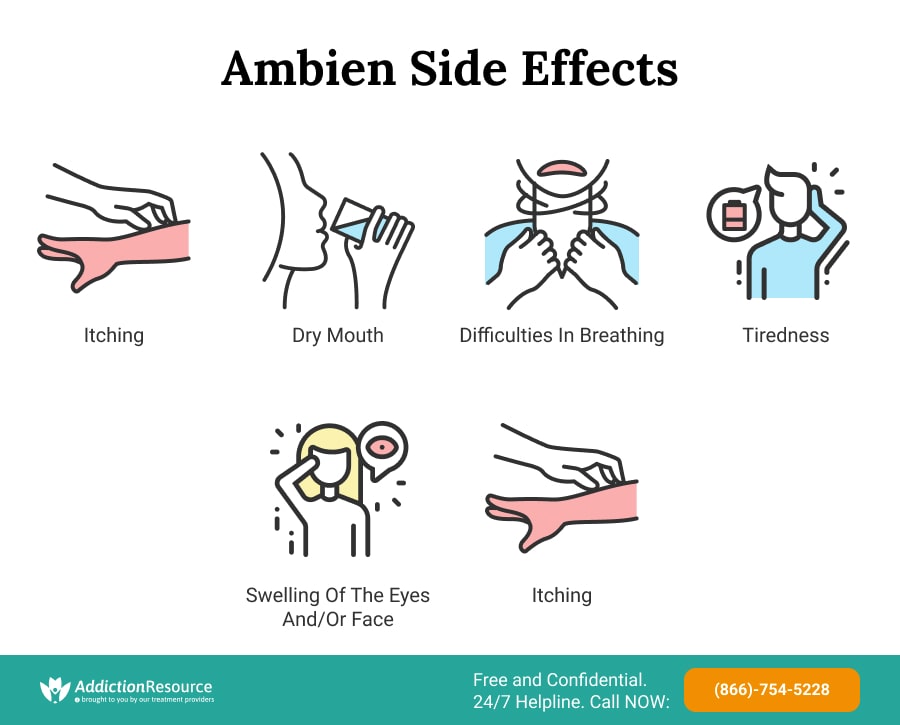
The statistics show that about 4% of all patients who receive zolpidem during premarketing clinical trials terminated the treatment due to the occurred side effects. Individuals often have a life-threatening allergic reaction to zolpidem.
Allergic reactions symptoms:
- rash
- hives
- itching
- swelling of the eyes, face, lips, tongue, or throat
- eye redness, yellow eyes, or skin
Zolpimist tends to depress the respiratory drive. Therefore, precautions should be taken in case of the following troubling breathing symptoms:
Troubled breathing symptoms:
- tiredness
- shortness of breath
- difficulty breathing or swallowing
- dry mouth or throat
- pharyngitis
Taking Ambien in the fed state can impact the pharmacokinetics of the drug. Food interaction is not suitable for therapeutic benefit.
Food interaction symptoms:
- constipation
- diarrhea
- vomiting
- heartburn
- stomach pain or tenderness
- changes in appetite
Symptoms of withdrawal from intermezzo begin within 48 hours of the final Ambien dose.
They include:
- shakiness, pain, burning, numbness, or tingling in the hands, arms, feet, or legs
- redness, burning, or tingling of the tongue (with sublingual tablets)
- muscle aches or cramps
- joint, back, or neck pain
- heavy menstrual bleeding
- pounding heartbeat
- chest pain
When taken together, zolpidem and alcohol can have several side effects and potentially dangerous interactions, including:
- drowsiness
- headache
- dizziness
- lightheadedness
- drugged feeling
- unsteady walking
- difficulty in keeping the balance
- nausea
- blurred vision or other vision problems
Long Term Ambien Side Effects
Being a short-term treatment for insomnia, zolpidem may cause adverse effects when used in the long term. During longer-term treatment (28 to 35 nights), zolpidem side-effects were dizziness (5%) and drugged feelings (3%).
Long term physical effects of Ambien include:
- vomiting
- staggering
- falling unconscious and inability to wake up
- sleep-related disorders (getting out of bed while not being fully awakened and perform activities unconsciously)
- breathing problems
- excessive drowsiness
- increased cancer risk
- pregnancy complications
- slowed heartbeat
- severe allergic reactions.
Long term effects of Ambien on the brain include:
- memory loss, amnesia
- coma (loss of consciousness for some time)
- abnormal thoughts and behavior anxiety
- developed dementia
Does It Cause Hallucinations?
Hallucinations on Ambien are a severe side effect. They can occur both after taking the drug alone and in combination with the following medications:
- Selective serotonin reuptake inhibitor antidepressants
- Alcohol
- Benzodiazepines
- Other sedatives or sleeping pills/tranquilizers
- Anti-anxiety medications
Apart from having visual and auditory hallucinations, some users report having delirium.
The duration of such zolpidem side effects can be from several minutes to hours, depending on the dosage and presence of other substances.
During a study of zolpidem, hallucinations were observed in 0.3% of patients. Zolpidem-induced hallucinations happened with doses greater than 5 mg/d and depended on the dose.
Does Intermezzo Cause Dementia?
Ambien dementia is likely to occur twice as often in patients with long-term insomnia aged 50 to 65 years than those older than 65 years. Zolpidem use is associated with an increased risk for dementia in the elderly population with underlying hypertension, diabetes, and stroke issues. Taking the drug for more than six months boosted the risk by 84%.
Does It Cause Weight Gain?
Ambien is expected to fight insomnia, but it also seems to unlock a primitive desire to eat in some patients. Ambien weight gain is a side effect usually associated with a sleep-related eating disorder. Users may unconsciously start preparing food and eating while being in partially sleeping conditions. According to the study, a 46-year older woman noticed nocturnal eating episodes after three weeks of taking zolpidem. The patient gained 50 pounds during the treatment. The woman had amnesia or partially remembered her actions. After the zolpidem usage termination, nocturnal eating stopped. Other users also report gaining extra weight under the same circumstances during zolpidem treatment.
Does It Cause Depression And Anxiety?
The FDA warns that users with a history of depression tend to experience even worse depressive symptoms and a rise in anxiety with Ambien intake. The DARU Journal of Pharmaceutical Sciences presents a case report of a young man who became depressed and attempted suicide after the drug intake. To avoid worsening of depression or suicidal thinking, doctors prescribe the least amount of feasible drug for the patient, which also reduces the risk of an OD on Ambien.
Do Sleepwalking, Sleep-Driving, And Sleep-Eating Occur?
Usually, after waking up, people do not remember what happened earlier and what they were doing – blackouts. If a patient has any parasomnia, one should inform the doctor and discuss the further usage of the medicine or changing the prescription.
Sleep Walking
Sleepwalking is one of the most popular sleeping side effects of Ambien that occur unconsciously sometime later after the drug administration. Two studies of zolpidem sleepwalking showed 7 of 1972 patients and 1 of 96 patients.
Sleep-Driving
Ambien can induce sleep-driving while asleep, which has led to legal problems for people. NHTSA reveals that after 4-5 hours of intake, cognitive and motor coordination impairment may occur.
Sleep-Eating
Ambien sleep eating occurs because of sleep-walking that frequently leads to gaining extra weight. Without remembering, a person may get out of bed and eat. Moreover, the person may try to prepare food and hurt themselves.
Does Edluar Cause Hair Loss?
There is no research-based information in the official literature about the interconnection between hair loss and Ambien. However, some users report having issues with hair loss while taking the drug. Over an extended period of taking zolpidem for treating sleeping disorders, several users mentioned side effects of Ambien like increased rate of hair loss, hair thinning, head skin irritation, and itching. It may depend on personal tolerance toward specific ingredients in the drug. Being a prescribed medicine, one should discuss the zolpidem side effects with a doctor and reconsider taking the medication.
Is Ambien Safe During Pregnancy And Breastfeeding?
Even though there aren’t many studies done in humans to reveal its adverse effects on the fetus, it can be deduced that Zolpidem is not recommended for taking during pregnancy and breastfeeding due to the following:
- Zolpidem crosses the placenta, which may produce respiratory depression and sedation in neonates.
- During the last three months of pregnancy, it may cause drowsiness or breathing problems in the newborn.
- Intake during the third trimester can cause slowed breathing and excessive sleepiness in newborns.
- It may pass into breast milk that is harmful to a child who is breastfed.
- It can risk the baby coming early (before 37 weeks) and having a lower birth weight.
Sexual Side Effects Of Zolpidem
According to the report, the patient with OCD mentioned the decreased libido after clonazepam was replaced by zolpidem. Another report states that sex is a susceptibility factor for adverse effects. Some users make unconscious activities after taking zolpidem before going to bed, including sexual intercourse.

All users should note that having sex with strangers during a blackout or sleepwalk may be fraught with sexually transmitted infections such as HIV and herpes.
Other users intentionally take the drug for unapproved recreational purposes, such as sex benefits. Instead of taking the drug in the bed before sleep, users take the pills and stay awake intentionally, which causes Ambien sexual problems such as an increased desire for sex and a more passionate attitude with increased arousal and lowered inhibitions. However, the drug needs to be taken only as prescribed because even great Ambien sex does not worth possible risks.
How To Stay Safe While Using Zolpimist?
Understanding the adverse effects of Ambien can help consumers make informed decisions about using hypnotic drugs and weaning off ambien. No matter what an individual’s level of Ambien side effects may be, rehab centers offer a way to recover physical and psychological health.
Medically supervised detox can ease one off a drug; for Ambien, withdrawal symptoms typically last 48 hours. Getting medical help and immediately calling 911 in case of emergency is the key.

Published on:
Updated on: