




Benzodiazepines or Benzos are a class of powerful medications that are available only on a doctor’s prescription. They call these CNS depressants. There are different bases to categorize them. For example, the route of intake, how long they show their action. Also, some are more potent than others.
Find the best treatment options.Call our free and confidential helpline
- What Are Benzodiazepine Uses?
- What Are The Types Of Benzodiazepines?
- What Are The Risks Of Using Benzodiazepines?
- How To Use Benzodiazepines Safely?
Benzodiazepines: A Very Powerful Medication With Varied Uses
Doctor use Benzodiazepines to treat a broad range of physical and mental disorders. These include anxiety, seizures, sleeplessness or insomnia, and abnormal muscle contractions. Moreover, they may also use it before a major surgery to relax the muscles or cause loss of memory.
Benzos work by altering the activity of a type of chemical in the brain. They call it Gamma Aminobutyric Acid (GABA). By enhancing the activity of GABA, they induce calming and relaxing effects on the brain and body which is the major sign of Benzodiazepines use.
Types Of Benzodiazepines
By how long they act in the body
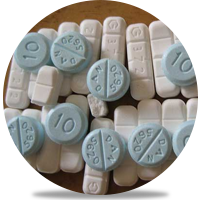
- Short-acting Benzodiazepines: They stay in the body for a short period. Then, they are either converted to other compounds or eliminated ultimately. Examples include Tranxene, Versed, and Halcion. Typically, they show the beneficial effects for 3 to 8 hours.
- Medium-acting Benzodiazepines: Under normal conditions, their duration of action is 11 to 20 hours. Xanax, Ativan, and Restoril are some well-known medications of this class.
- Long-acting Benzodiazepines: Medications like Librium, Klonopin, Valium, and Dalmane have an extended presence in the body. They may stay inside the body in the original form for up to 3 days.
By route of intake
- Benzos taken by mouth: Xanax, Xanax XR, Klonopin, Tranxene, Librium, Valium, Ativan, Restoril, and Halcion. No doubt, all these medications are available in different formulations for oral use.
- Injectable Benzos: Valium injection, Ativan Injection. As a matter of fact, the injectable forms are used when one needs a very rapid drug effect or is not able to use other methods due to some problems.
- Benzo gel for use into the rectum: Diastat, Diastat Pediatric. The doctor may use it to control seizures in the patients who are not able to take other forms of Diazepam.
By how fast they start acting once a patient takes them: This type of categorization is applicable only to the oral forms.
- Fast-acting: Valium and Tranxene usually start showing their effects half to one hour after being taken.
- Slow-acting: Xanax, Ativan, and Klonopin take a longer time to exert their beneficial effects.
Risks Of Using Benzodiazepines
In addition to the widespread benefits, Benzodiazepines also have some risks. Therefore, one should consult a doctor about the potential risks before starting the therapy. That’s how some or many of the side effects of Benzos can be prevented.
What makes their use a primary concern for the doctors and patients, is their ability to cause an addiction. Because they work by altering the brain chemicals, they are habit-forming. If one does not get early treatment, such addiction can cause a variety of health and other complications. Notably, some of them may be potentially fatal.
If a patient develops a dependence to Benzodiazepines, abruptly discontinuing them can cause some undesirable effects. These are called withdrawal symptoms.
Other risks include fall, accidents, and hip fracture.
Learning about the types of Benzodiazepines may help one take an active role in the decision for treatment. Additionally, it may also help a patient cut down the risk of dependence, withdrawal, and addiction.
Use Benzodiazepines Safely
Duration of action inside the body is a major factor that determines their use. For instance, long-acting benzos are more useful to treat anxiety and seizures. To address these problems, one needs a consistently maintained drug level in the blood. For this reason, they use the long-acting compounds.
Similarly, doctors prefer short-acting Benzos to treat sleep problems. In this case, one does not need to maintain a continuous drug level in the blood. In fact, a night time sleep is what everyone wants.
For old patients, the short-acting compounds may be a better choice. They have a lower risk of causing falls, fracture of the hip and slowed breathing. For this reason, they offer a significant advantage over the long-acting Benzos.
In the same way, short bursts of anxiety attacks are best treated with the short-acting Benzos. However, persistent anxiety responds to the long-acting compounds.
Likewise, if one needs a rapid relief, a doctor may prescribe a fast-acting Benzo.
If someone seems to be addicted to benzos, it is important to talk to a medical specialist. They can teach ways to deal with the cravings, prevent relapses. Finally, the addict will be on their way to a full recovery.
Looking for professional medical help for addiction to Benzodiazepines? Get the best rehabs page.
Find the best treatment options.Call our free and confidential helpline

Published on:
Updated on: