

 Edit by: Brittni
A Partial Hospitalization Program (PHP) provides intensive treatment and support for individuals managing mental health or substance use challenges while allowing them to maintain some daily routines. The Partial Hospitalization Program (PHP) provides intensive care without requiring full hospitalization, allowing participants to receive therapy, medical support, and skill-building while returning home in the evenings.
According to the National Association for Behavioral Health, in 2022, there were approximately 1,380 day treatment programs, also known as Partial Hospitalization Programs (PHPs), across the U.S., designed for individuals with mental illness or co-occurring disorders. PHPs are important for those who need more support than traditional outpatient care but do not require round-the-clock supervision. By offering a flexible yet structured approach, PHPs help individuals transition to independent living while maintaining access to professional treatment.
Programs in PHP include various evidence-based therapies such as Cognitive Behavioral Therapy (CBT), Dialectical Behavior Therapy (DBT), and Medication-Assisted Treatment (MAT). Patients attend 5 to 7 weekly sessions, each lasting 5 to 8 hours daily. These programs incorporate individual and group therapy, medication management, relapse prevention planning, and life skills training to promote long-term recovery. PHPs also emphasize family involvement and aftercare planning to ensure a smooth transition into daily life after completing treatment.
The cost of a PHP in the U.S. varies based on location, treatment duration, and services provided. On average, PHPs range from $350 to $450 per day, with a full program costing $10,000 to $30,000 per month. Insurance coverage through private providers, Medicaid, and Medicare helps offset costs, depending on eligibility and policy details. States with a higher cost of living have more expensive programs, while more affordable options are found in less populated regions.
What Is a Partial Hospitalization Program (PHP)?
A Partial Hospitalization Program (PHP) is a structured, part-time treatment program designed to provide intensive care for individuals struggling with mental health or substance use disorders while allowing them to maintain daily responsibilities, according to GoodRx. PHP offers a flexible approach to recovery, bridging the gap between inpatient and outpatient care by providing therapy, medical supervision, and support without requiring overnight stays. The core purpose of a PHP is to offer a comprehensive treatment plan that includes individual and group therapy, medication management, and skill-building exercises to help individuals achieve long-term stability and wellness.
What Is the Commitment for a Partial Hospitalization Program?
Commitment to a Partial Hospitalization Program requires attending sessions multiple days per week, 5 days, for several hours each day. Success in PHP demands personal dedication to recovery, including active participation in therapy, adherence to treatment plans, and a willingness to make necessary lifestyle changes. This involves adjusting daily routines, improving coping strategies, and building a strong support system outside treatment. Individuals maximize their progress and work toward lasting well-being by fully engaging in the program.
What Are the Requirements to be Admitted to a PHP?
The requirements to be admitted to a PHP are having a diagnosed substance use disorder or mental health condition, being medically and psychiatrically stable, completing detox if necessary, and having the ability to participate in therapy. Factors such as the risk of relapse, a supportive living environment, commitment to attendance, and financial arrangements play a role in determining eligibility. These criteria ensure that individuals receive the appropriate level of care in a structured yet flexible setting that supports their recovery journey.

The requirements to be admitted to a PHP are as follows:
- Diagnosis of a substance use disorder or mental health condition: Admission requires a formal diagnosis of a mental health disorder, such as depression, anxiety, or bipolar disorder, or a substance use disorder that necessitates structured treatment and support.
- Medical and psychiatric stability: Individuals must be medically and psychiatrically stable, meaning they do not require round-the-clock supervision but still need intensive care to manage their condition.
- Completion of detox (if needed): Those with substance use disorders must have completed detoxification if withdrawal symptoms could interfere with treatment participation, ensuring they focus on recovery.
- Ability to participate in therapy: Participants must be physically and mentally capable of engaging in individual and group therapy, actively following treatment plans, and applying learned strategies.
- Moderate to high risk of relapse: PHP is suited for individuals who face a risk of relapse but do not need inpatient care, offering intensive support to maintain progress and prevent deterioration.
- Supportive living environment: A stable home or external support system reinforces treatment progress and provides a foundation for continued recovery outside of PHP sessions.
- Commitment to attendance: PHP requires multiple weekly sessions, five days per week for several hours daily, necessitating a strong commitment to attending all scheduled treatments.
- Insurance or financial arrangements: Individuals must have insurance coverage or the ability to make financial arrangements to ensure access to the full duration of the program without interruption.
What Is the Process During a Partial Hospitalization Program?
The process during a Partial Hospitalization Program (PHP) involves a structured treatment plan that includes assessment, therapy sessions, and ongoing progress monitoring to support recovery. This ensures that individuals receive comprehensive care while maintaining their daily responsibilities.
The process during a Partial Hospitalization Program is detailed below:
- Initial Assessment and Intake: Individuals undergo a comprehensive evaluation by medical and mental health professionals to determine their specific needs, treatment goals, and the appropriate level of care.
- Personalized Treatment Plan Development: Based on the assessment, a customized treatment plan is created, outlining therapy types, medication management (if necessary), and recovery strategies tailored to the individual’s condition.
- Daily Structured Therapy Sessions: Participants attend therapy sessions multiple times per week, for several hours per day. These include individual counseling, group therapy, cognitive-behavioral therapy (CBT), and skills training.
- Medication Management (if applicable): For individuals requiring medication, psychiatric professionals monitor prescriptions, adjust dosages as needed, and ensure proper medication adherence to support stability.
- Family and Support System Involvement: Programs include family education and therapy to improve communication, strengthen support systems, and help loved ones understand the recovery process.
- Skill-Building and Coping Strategies: Participants learn and practice coping techniques, stress management skills, and relapse prevention strategies to handle real-world challenges effectively.
- Regular Progress Evaluations: Clinicians regularly assess each individual’s progress, making necessary adjustments to the treatment plan to ensure continued improvement and recovery.
- Transition Planning and Aftercare Coordination: As individuals near program completion, discharge planning begins, including referrals to outpatient therapy, support groups, and other resources to maintain long-term stability.
What is the Duration of a Partial Hospitalization Program?
The duration of a Partial Hospitalization Program (PHP) lasts between 30 to 90 days, depending on individual needs and treatment progress, as reported by Substance Abuse and Mental Health Services Administration. While many Partial Hospitalization Programs (PHPs) run for about 4 to 6 weeks, some extend to 60 or 90 days for those requiring additional support. Program duration varies based on factors such as the severity of the condition, treatment response, and personal recovery goals. Customization allows for flexible care, with clinicians adjusting the length of stay to ensure lasting progress and stability.
How Does PHP Compare to an Outpatient Drug Rehab?
PHP compares to an outpatient drug rehab by offering a higher level of care with more structured and intensive treatment while still allowing individuals to live at home. Unlike standard outpatient programs, PHP requires multiple sessions per week, lasting several hours daily, providing a balance between inpatient hospitalization and outpatient flexibility. It is best suited for individuals who need more support than traditional outpatient rehab care but do not require 24/7 supervision.
Both PHP and outpatient rehab focus on recovery, therapy, and relapse prevention, but they differ in intensity, time commitment, and level of medical oversight.
PHP compares to an outpatient drug rehab in the following ways:
| Aspect | Partial Hospitalization Program (PHP) | Outpatient Rehab |
| Level of Care | Intensive, structured, with medical and psychiatric oversight | Less intensive, suitable for mild to moderate cases |
| Time Commitment | 5 to 7 days per week, several hours per day | 1 to 3 days per week, shorter sessions |
| Medical Supervision | Regular monitoring, medication management if needed | Limited medical oversight, referrals as necessary |
| Best For | Individuals needing structured support but not 24/7 care | Those with mild to moderate substance use disorders who need flexible treatment |
| Flexibility | Some flexibility but requires significant time commitment | Highly flexible, allowing work or school participation |
| Cost | Higher due to intensive care and services | Lower, as it involves fewer sessions and medical resources |
| Relapse Prevention | Strong focus on coping strategies and therapy | Provides relapse prevention but with less intensive support |
PHP serves as a bridge between inpatient and outpatient care, offering a middle-ground solution for individuals needing a structured approach to recovery while maintaining some independence.
What Techniques are Used in a Partial Hospitalization Program?
Techniques used in a Partial Hospitalization Program (PHP) include evidence-based therapies such as Cognitive Behavioral Therapy (CBT), Dialectical Behavior Therapy (DBT), Motivational Interviewing (MI), group therapy sessions, and Medication-Assisted Treatment (MAT). These approaches help individuals manage mental health and substance use disorders by addressing thought patterns, emotional regulation, motivation, and medical needs.
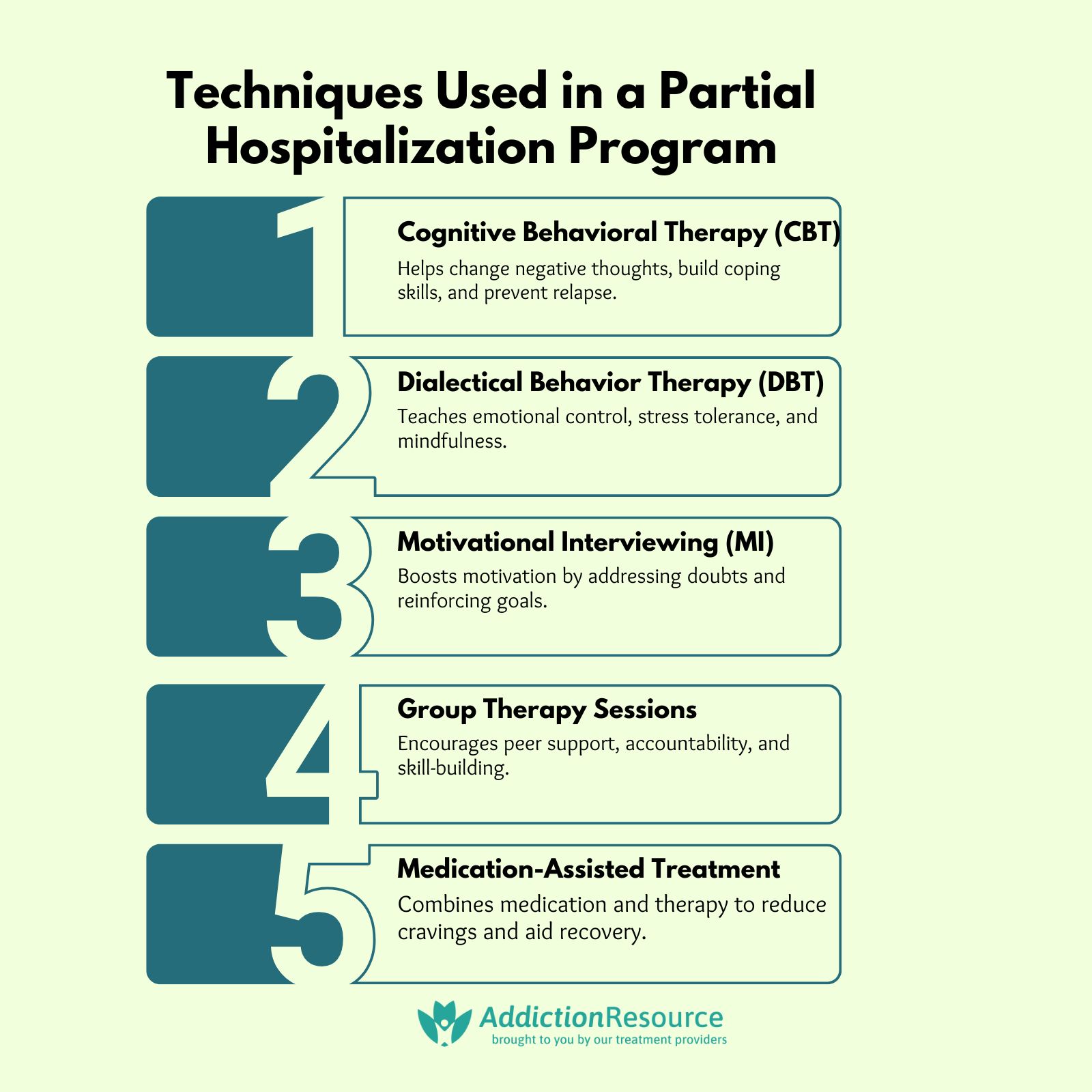
Techniques used in a Partial Hospitalization Program (PHP) are as follows:
Cognitive Behavioral Therapy (CBT)
Cognitive Behavioral Therapy (CBT) is a structured, goal-oriented approach that helps individuals identify and change negative thought patterns contributing to their mental health or substance use issues. It teaches coping strategies, problem-solving skills, and ways to manage triggers effectively. CBT is beneficial because it provides long-term tools for preventing relapse and improving emotional resilience. A study by Hofmann SG, Asnaani A, Vonk IJ, Sawyer AT, Fang A. et al. 2012, titled “The Efficacy of Cognitive Behavioral Therapy: A Review of Meta-analyses,” shows that CBT significantly reduces symptoms of depression, anxiety, and addiction by promoting healthier thinking and behaviors.
Dialectical Behavior Therapy (DBT)
Dialectical Behavior Therapy (DBT) is a specialized form of CBT focusing on emotional regulation, distress tolerance, interpersonal effectiveness, and mindfulness. It is particularly effective for individuals struggling with intense emotions, self-harm tendencies, or borderline personality disorder. DBT works by teaching individuals how to balance acceptance and change, helping them develop healthier ways to cope with stress. Research by Jamilian HR, Malekirad AA, Farhadi M, Habibi M, Zamani N. et al. 2014, titled “Effectiveness of group dialectical behavior therapy (based on core distress tolerance and emotion regulation components) one expulsive anger and impulsive behaviors,” indicates that DBT improves emotional stability and reduces impulsive behaviors, making it a valuable component of PHP.
Motivational Interviewing (MI)
Motivational Interviewing (MI) is a client-centered technique that enhances an individual’s motivation to change by addressing ambivalence and reinforcing personal goals. Therapists use open-ended questions, reflective listening, and affirmations to guide individuals toward self-directed recovery. MI is beneficial because it empowers individuals to take control of their healing process, leading to increased engagement and long-term commitment to recovery. A study by Moos RH. et al. 2007, titled “Theory-based active ingredients of effective treatments for substance use disorders,” has shown that MI is highly effective in treating substance use disorders by strengthening a person’s readiness to change.
Group Therapy Sessions
Group therapy sessions provide a supportive environment where individuals share experiences, learn from others, and develop the social skills necessary for recovery. These sessions include psychoeducation, skill-building exercises, and peer support discussions. Group therapy is beneficial because it reduces feelings of isolation, promotes accountability, and enhances interpersonal connections. Research by SAMHSA supports group therapy as an effective method for improving mental health and substance use outcomes by promoting shared learning and emotional support.
Medication-Assisted Treatment (MAT)
Medication-Assisted Treatment (MAT) combines FDA-approved medications with behavioral therapy to treat substance use disorders, particularly opioid and alcohol addiction. It stabilizes brain chemistry, reduces cravings, and prevents withdrawal symptoms. MAT is beneficial because it significantly increases the chances of long-term recovery while reducing the risk of relapse and overdose. Studies from the National Institute on Drug Abuse (NIDA) confirm that MAT improves treatment retention rates and overall recovery success.
What Happens After Finishing a Partial Hospitalization Program?
After finishing a Partial Hospitalization Program (PHP), individuals transition to less intensive forms of care to maintain progress and prevent relapse. This includes ongoing therapy, structured living environments, and participation in support groups to reinforce recovery strategies.
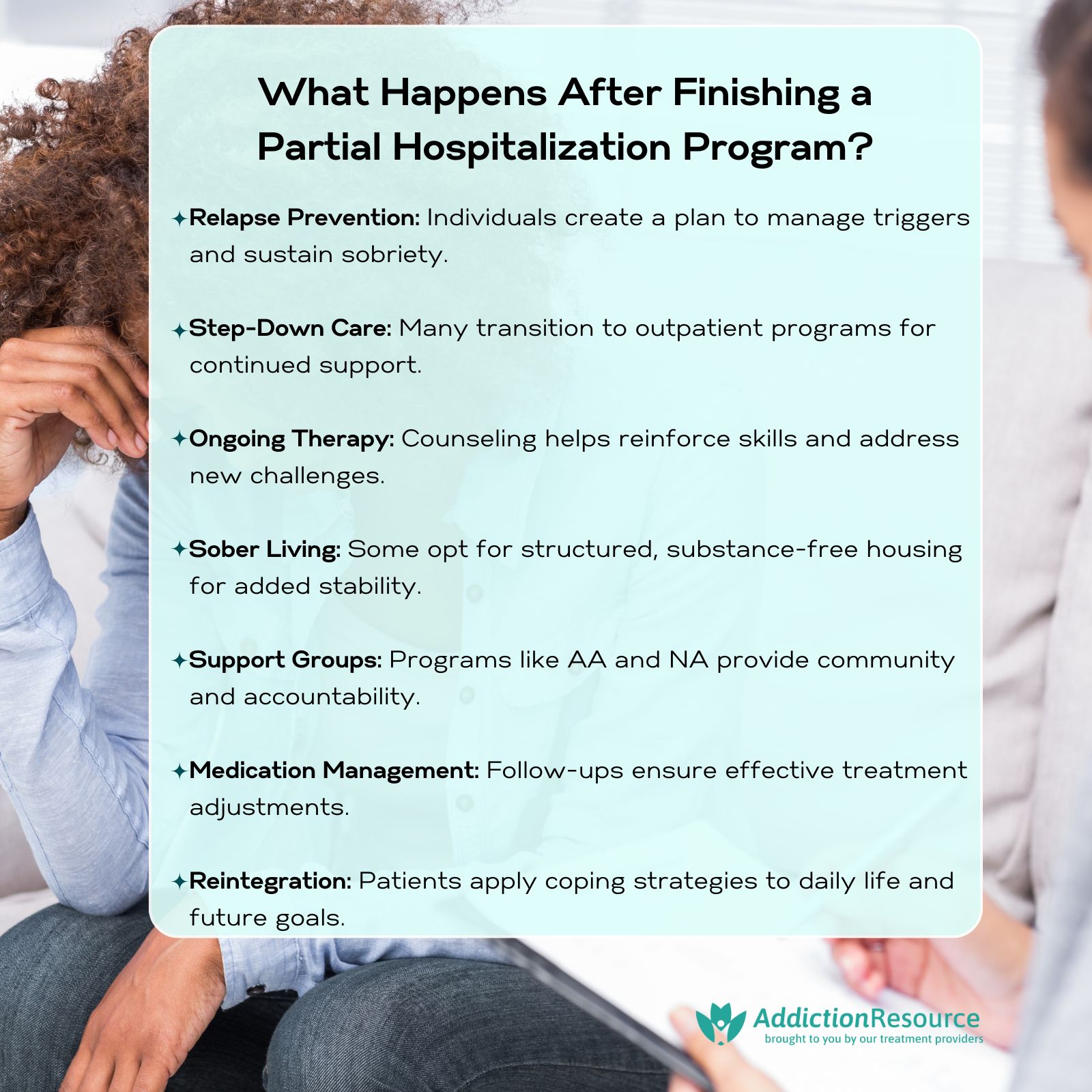
After finishing a Partial Hospitalization Program, the following things happen:
- Relapse Prevention Planning: Individuals work with their treatment team to develop a personalized relapse prevention plan, identifying triggers, coping strategies, and emergency contacts to maintain long-term sobriety and stability. The National Institute on Drug Abuse (NIDA) reports that 40-60% of individuals in the U.S. relapse within the first year following addiction treatment. This underscores the need for relapse prevention programs, which offer continuous support, coping techniques, and structured guidance to help individuals sustain long-term recovery.
- Step-Down to Outpatient Care: Many individuals transition to an Intensive Outpatient Program (IOP) or standard outpatient therapy, which provides continued support while allowing greater flexibility for work, school, or personal responsibilities.
- Continued Individual and Group Counseling: Ongoing therapy sessions help individuals strengthen the skills learned in PHP, address new challenges, and receive professional guidance as they adjust to daily life outside of structured treatment.
- Sober Living Homes (if needed): Some individuals choose to reside in sober living homes, which provide a substance-free, supportive environment with peer accountability, house rules, and access to recovery resources.
- Participation in Support Groups: Engaging in 12-step programs like Alcoholics Anonymous (AA), Narcotics Anonymous (NA), or alternative peer support groups helps individuals build a strong recovery network and maintain motivation.
- Medication Management and Follow-Up Care: For those receiving Medication-Assisted Treatment (MAT) or psychiatric medications, regular follow-ups with healthcare providers ensure proper dosage, effectiveness, and adjustments if necessary.
- Reintegration into Daily Life: Individuals begin applying the coping strategies and skills learned in PHP to their personal and professional lives, focusing on rebuilding relationships, maintaining structure, and setting long-term goals for stability.
Does a PHP Administer Drug Tests?
Yes, a Partial Hospitalization Program (PHP) administers drug tests to ensure compliance with treatment and support recovery efforts. Regular testing helps monitor substance use, identify relapses early, and adjust treatment plans as needed. Common methods include urine tests, which detect recent drug use, and blood alcohol content (BAC) tests for alcohol screening. Drug testing promotes accountability and reinforces a substance-free environment, helping individuals stay on track with their recovery goals.
The time required for each test varies based on the method used. A urine test takes a few minutes for sample collection, with results available within a few hours to a few days, depending on the testing facility. A BAC test, conducted using a breathalyzer, provides immediate results within seconds, while blood tests, which offer more precise readings, require a few minutes for collection and take several hours to process in a lab. These tests are quick and minimally invasive, ensuring they do not disrupt treatment schedules.
Is Partial Hospitalization Better than Intensive Outpatient?
Yes, a Partial Hospitalization Program (PHP) can be better than an intensive outpatient program (IOP) for individuals who need a higher level of care and more structured support. According to McCarty D et al. 2014, titled “Substance abuse intensive outpatient programs: assessing the evidence,” IOPs show high-quality evidence indicating that IOPs produce outcomes comparable to inpatient care, with significant reductions in alcohol and drug use, though variations exist in program structures and outcome measurements.
PHP provides more intensive treatment, requiring several hours of therapy per day, 5 to 7 days a week, making it ideal for those at a higher risk of relapse or who need closer medical and psychiatric supervision. However, intensive outpatient (IOP) is a better option for individuals who require flexibility to maintain work, school, or family commitments while still receiving structured care. The best choice depends on the individual’s specific recovery needs, level of stability, and ability to manage daily responsibilities outside of treatment.
What are the Limitations of a Partial Hospitalization Program?
The limitations of a Partial Hospitalization Program (PHP) are that it is not suitable for individuals with severe addictions, does not provide 24/7 supervision, and requires a stable and supportive home environment. While PHP offers intensive care, it is designed for individuals who manage some level of independence outside of treatment.
PHP is not ideal for those with severe substance use disorders or co-occurring mental health conditions that require constant medical attention. Individuals experiencing life-threatening withdrawal symptoms, suicidal ideation, or extreme instability need inpatient or residential care instead. Because PHP participants return home each day, those without a supportive or substance-free living environment struggle to maintain recovery. The program also requires a significant time commitment, which is challenging for those balancing work, school, or family obligations.
What Is the Cost of a Partial Hospitalization Program in the U.S.?
The cost of a Partial Hospitalization Program (PHP) in the U.S. ranges from $350 to $450 per day, amounting to approximately $10,500 to $13,500 for a 30-day program. Long-term programs lasting more than 30 days cost between $9,000 and $18,000 per month. Factors influencing these costs include the types of services provided, the intensity of treatment, the facility’s location, the amenities offered, and the program duration. For example, facilities in urban areas or regions with higher living costs charge more than those in rural locations. Programs offering specialized services or luxury amenities have higher fees.
Is a PHP Covered by Insurance?
Yes, Partial Hospitalization Programs (PHPs) are covered by insurance, including private insurance, Medicaid, and Medicare. Under the Affordable Care Act (ACA), substance use disorder treatment is considered an important health benefit, requiring most insurance plans to provide coverage. Medicare covers PHP services under Part B, provided they are deemed medically necessary and prescribed by a physician. Medicaid coverage varies by state but includes PHP services. Verifying specific coverage details with your insurance provider is important, as out-of-pocket costs and coverage limits differ.
Who Is a Good Candidate for a Partial Hospitalization Program?
Individuals with mild to moderate addictions, a strong support system, and a stable home environment are good candidates for a Partial Hospitalization Program (PHP). PHPs benefit those who require intensive treatment but do not need 24/7 supervision, allowing them to receive structured care while maintaining daily responsibilities. A supportive home environment and reliable transportation are required for successful participation in a PHP.
Does PHP Help with Dual Diagnosis?
Yes, Partial Hospitalization Programs (PHPs) help with dual diagnosis cases, where individuals experience both mental health disorders and substance use disorders. According to SAMHSA, approximately 21.5 million adults in the U.S. experience co-occurring mental health and substance use disorders. These programs provide integrated care, combining therapies such as Cognitive Behavioral Therapy (CBT) and Dialectical Behavior Therapy (DBT) to address both conditions simultaneously. Medication management is also offered to stabilize mental health symptoms and support recovery. This comprehensive approach ensures that both aspects of the dual diagnosis are treated concurrently, improving overall outcomes.
How to Find a Partial Hospitalization Program Near Me?
To find a Partial Hospitalization Program near me, individuals should research licensed and accredited facilities that offer evidence-based treatments and comprehensive care. Ensuring that the PHP near me meets professional standards and provides personalized treatment plans is important for successful recovery.
To find a Partial Hospitalization Program, the following aspects should be considered:
- Licensed and Accredited Facilities: Look for state-licensed programs accredited by organizations such as the Commission on Accreditation of Rehabilitation Facilities (CARF) or the Joint Commission. Accreditation ensures that the program meets high standards of care and follows best practices in addiction and mental health treatment.
- Evidence-Based Treatment Approaches: A quality PHP near me must offer evidence-based therapies such as Cognitive Behavioral Therapy (CBT), Dialectical Behavior Therapy (DBT), and Medication-Assisted Treatment (MAT). These scientifically supported methods improve long-term recovery outcomes.
- Experienced and Qualified Staff: Ensure the program has a team of licensed professionals, including psychiatrists, therapists, and addiction specialists. The experience and credentials of the staff play a paramount role in providing effective treatment.
- Personalized Treatment Plans: Every individual’s recovery journey is different, so the PHP should offer customized treatment plans that address specific needs, co-occurring disorders, and personal recovery goals.
- Patient Reviews and Success Rates: Reading reviews and testimonials from former patients provides insight into the program’s effectiveness. Success rates and patient satisfaction indicate whether the facility provides high-quality care.
- Aftercare Support and Relapse Prevention: A good PHP includes aftercare planning, such as outpatient therapy, support groups, and relapse prevention strategies, to help individuals maintain long-term sobriety after completing the program.
Can I Continue Working or Attending School While in PHP?
No, you cannot continue working or attending school in the Partial Hospitalization Program (PHP) because it requires a significant time commitment, making it challenging to maintain employment or attend school concurrently. PHPs involve attending therapy sessions for 5 to 8 hours daily, 5 to 7 days a week, to provide intensive treatment for mental health or substance use disorders. This demanding schedule leaves limited time for work or academic responsibilities. However, some individuals coordinate with their employers or educational institutions to arrange leave or accommodations during their treatment period.
What Is the Daily Schedule Like in a PHP Program?
The daily schedule in a PHP program is structured to provide comprehensive therapeutic support throughout the day. Participants engage in treatment sessions 5 to 8 hours daily, 5 to 7 days a week. A typical day in the PHP program includes individual therapy, group counseling, educational workshops, and skill-building activities, with breaks for meals and relaxation. This structured approach ensures that individuals receive intensive care while returning home in the evenings.
Do I Need Medical Detox Before Starting PHP?
Yes, you need medical detox before starting PHP if you are dealing with substance use disorders. It is necessary to complete detox before starting a Partial Hospitalization Program (PHP). PHPs are designed for medically stable individuals who do not require 24/7 medical supervision. Completing detox ensures that you fully participate in the therapeutic components of the program without the complications of withdrawal symptoms.
How Often Do I Attend Sessions in PHP?
You attend sessions in PHP 5 to 7 days a week, with each session lasting approximately 5 to 8 hours per day. This intensive schedule provides comprehensive care and support, allowing individuals to receive structured treatment while returning home each evening.
Can I Transition to Inpatient Treatment if PHP Is Not Enough?
Yes, you can transition to inpatient treatment if the Partial Hospitalization Program (PHP) is not enough. Inpatient programs offer 24/7 supervision and a highly structured environment, which is necessary for individuals requiring more intensive care. Clinical assessments and ongoing evaluations during the inpatient program help determine the most appropriate level of care, ensuring that treatment aligns with your specific requirements.
Is Family Involvement Allowed in PHP?
Yes, family involvement is allowed rather than encouraged in Partial Hospitalization Programs (PHPs). Involving family members enhances the support system, improves communication, and addresses any familial issues contributing to the individual’s condition, as studied by Hogue A, Becker SJ, et al. 2021, titled “Family involvement in treatment and recovery for substance use disorders among transition-age youth: Research bedrocks and opportunities.” Many PHPs offer family therapy sessions and educational workshops to help families understand the recovery process and learn how to support their loved ones effectively.
Will I be Drug Tested During PHP?
Yes, you will be drug tested during PHP. Regular testing ensures accountability and tracks progress in recovery. Common tests include urine screenings and blood alcohol content (BAC) assessments, which detect recent substance use. These tests help treatment providers identify relapse risks early and adjust care plans as needed. Maintaining a substance-free environment is important for the effectiveness of PHP, and drug testing reinforces adherence to the program’s guidelines.
What Kind of Aftercare Support Is Available After PHP?
After PHP, aftercare support options available include transitioning to Intensive Outpatient Programs (IOPs), participating in support groups like Alcoholics Anonymous (AA) or Narcotics Anonymous (NA), engaging in individual counseling, and utilizing community resources. IOPs provide continued structured treatment with fewer weekly hours, helping individuals ease into daily responsibilities. Support groups offer peer connections and accountability, while individual therapy addresses personal challenges and relapse prevention strategies. A well-developed aftercare plan ensures long-term recovery success by providing ongoing guidance and support.

 FindTreatment.gov