



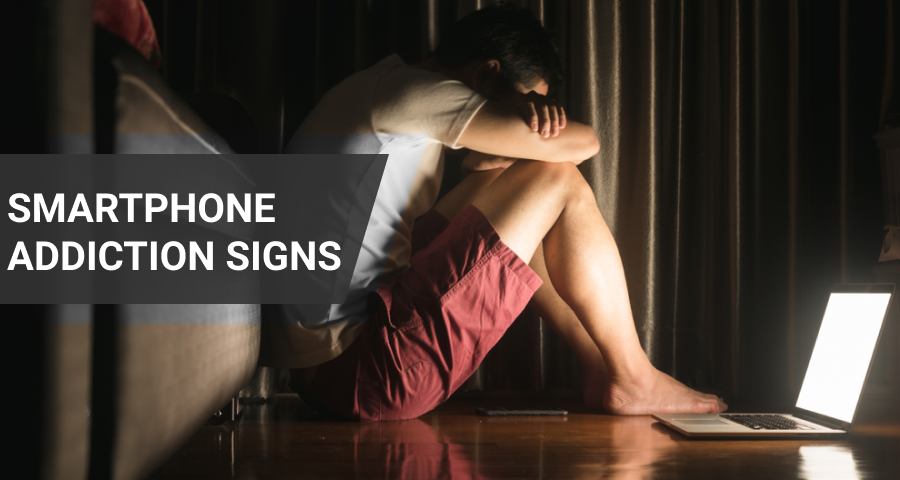
What is Smartphone Addiction and how is it Diagnosed?
In America, 90% of adults and 75% of 12-17 year-olds own a cell phone. The number of youth using cell phones has gone up drastically since 2004, when it was a mere 44%, whereas the adults’ use has held a steady incline. With the integration of the online world into our lives via smartphones, new pathologies are developing every day.
One such pathology is “Nomophobia”, an irrational fear of being separated from your phone, running out of battery or data, and having no service. In short- no mobile phobia. Smartphone addiction signs also can suggest additional behavioral problems and disorders, such as online gambling, shopping, virtual sex addiction. Currently, the DSM-5 has only recognized compulsive gambling as a behavioral addiction, considering the rest of these types of abuse as impulse disorders.
Smartphone Addiction Symptoms
A study done in New York City by Basch, C.H., Ethan, D., Zybert, P. et al. found that of those crossing busy intersection on the “Don’t Walk” signal, 42% was using a smartphone at the time- talking, wearing headphones or looking at the screen. This kind of behavior has influenced the tenfold increase in injuries related to phone use from 2005 to 2010 and is still on the rise.
Smartphone addiction symptoms can be physical and psychological. Because of its effect on all organs, symptoms can manifest in different systems.
Musculoskeletal system:
- Rigidity
- Muscle pain
- Neck pain caused by staying in a strained position for a long time while looking at the mobile phone
- Pain and weakness in the thumbs and wrists leading to de Quervain’s tenosynovitis
Visual System:
- Computer Vision Syndrome
- Ocular afflictions
- Dryness, blurry vision
- Ocular irritation
- Ocular redness
Auditory System:
Auditory and tactile illusions: the sensation of having heard a ring or felt a vibration of a cell phone.
Neuropsychiatric symptoms:
- Persistent use in dangerous situations or prohibited contexts
- Social and familial conflicts and confrontations,
- Loss of interest in other activities.
- A continuation of the behavior is observed despite the negative effects or the personal malaise caused.
- Preferring the cell phone to personal contact
- Frequent and constant consultations in brief periods causing insomnia and sleep disturbances
- Anxiety and loneliness when unable to send a message or receive an immediate response
- Stress and changes in mood due to the need to respond immediately to messages
A brain imaging study of 19-year-old smartphone or internet addicts showed significantly higher levels of the neurotransmitter GABA than glutamate-glutamine. This meant that there was more of the neurotransmitter that inhibits neurons, than one energizing them. GABA is responsible, among other things, for motor control and vision. Therefore, with such high levels of it, these functions are slowed, resulting in poorer focus and attention. This is a big factor in the number of accidents related to smartphones.
Psychiatric Comorbidities:
- Sleep disorders
- Drug addiction
- Personality and psychiatric problems
Is One A Smartphone Addict?
A study on smartphone addiction and nomophobia done by Caglar Yildirim and Ana-PaulaCorreia resulted in the development of a twenty question quiz. The first phase of this development involved “a qualitative exploration of nomophobia through semi-structured interviews conducted with nine undergraduate students”. This enabled them to define four dimensions of nomophobia: not being able to communicate, losing connectedness, not being able to access information and giving up convenience. After this, the NMP-Q (nomophobia questionnaire) was created. It was then tested on over 300 university students, resulting in proof of its effectiveness for nomophobia detection.
To find out how you rank on the scale of not addicted to nomophobic, take a moment to fill out the NMP-Q below.
Nomophobic Self-Test (NMP-Q)
Rate each item on a scale of 1 (“completely disagree”) to 7 (“strongly agree”), then calculate the result and check point table.
- I would feel uncomfortable without constant access to information through my smartphone.
- I would be annoyed if I could not look information up on my smartphone when I wanted to do so.
- Being unable to get the news (e.g., happenings, weather, etc.) on my smartphone would make me nervous.
- I would be annoyed if I could not use my smartphone and/or its capabilities when I wanted to do so.
- Running out of battery in my smartphone would scare me.
- If I were to run out of credits or hit my monthly data limit, I would panic.
- If I did not have a data signal or could not connect to Wi-Fi, then I would constantly check to see if I had a signal or could find a Wi-Fi network.
- If I could not use my smartphone, I would be afraid of getting stranded somewhere.
- If I could not check my smartphone for a while, I would feel a desire to check it.
If I did not have my smartphone with me …
- I would feel anxious because I could not instantly communicate with my family and/or friends.
- I would be worried because my family and/or friends could not reach me.
- I would feel nervous because I would not be able to receive text messages and calls.
- I would be anxious because I could not keep in touch with my family and/or friends.
- I would be nervous because I could not know if someone had tried to get a hold of me.
- I would feel anxious because my constant connection to my family and friends would be broken.
- I would be nervous because I would be disconnected from my online identity.
- I would be uncomfortable because I could not stay up-to-date with social media and online networks.
- I would feel awkward because I could not check my notifications for updates from my connections and online networks.
- I would feel anxious because I could not check my email messages.
- I would feel weird because I would not know what to do.
How You Score:
- 20: Not at all nomophobic. You have a very healthy relationship with your device and have no problem being separated from it.
- 21-60: Mild nomophobia. You get a little antsy when you forget your phone at home for a day or get stuck somewhere without WiFi, but the anxiety isn’t too overwhelming.
- 61-100: Moderate nomophobia. You’re pretty attached to your device. You often check for updates while you’re walking down the street or talking to a friend, and you often feel anxious when you’re disconnected. Time for a digital detox?
- 101-120: Severe nomophobia. You can barely go for 60 seconds without checking your phone. It’s the first thing you check in the morning and the last at night, and dominates most of your activities in-between.
If your score suggests that you are suffering from nomophobia, It might be time for a serious intervention. To find out more about technology addiction and how to fight it, call now.

Published on:
Updated on: