

 Edit by: Brittni
Percocet addiction develops when individuals misuse the medication, leading to physical and psychological dependence. This opioid-based pain reliever, when taken beyond prescribed limits, alters brain chemistry, reinforcing compulsive drug-seeking behaviors. Over time, tolerance builds, requiring higher doses to achieve the same effects, making addiction a serious and escalating issue. According to the National Center for Drug Abuse Statistics mentioned by WePercocet AddictionbMD, 3.8% of American adults abuse opioids each year, including Percocet, making over 10 million people.
The symptoms of Percocet addiction manifest in both physical and behavioral changes. Individuals experience drowsiness, nausea, slurred speech, and respiratory depression. Behavioral signs include doctor shopping, financial issues, withdrawal from social activities, and an inability to stop using despite negative consequences. Over time, addiction disrupts daily life and personal relationships.
Several factors contribute to Percocet addiction, including prolonged use for pain management, genetic predisposition, and co-existing mental health disorders such as anxiety or depression. Easy access to prescription opioids, peer influence, and using Percocet as a coping mechanism for stress or trauma also increase the likelihood of developing an addiction. A study by Berrettini W. et al. 2017, “A brief review of the genetics and pharmacogenetics of opioid use disorders,” suggests that up to 50% of a person’s risk for opioid addiction is hereditary.
The effects of Percocet addiction impact physical health, mental well-being, and social stability. Chronic use of Percocet leads to liver damage, respiratory issues, and cognitive impairment. Psychological effects include mood swings, anxiety, and depression. Additionally, addiction results in strained relationships, financial difficulties, and legal troubles, further exacerbating personal struggles.
Effective treatment for Percocet addiction includes medical detox, counseling, and long-term support. Medications such as buprenorphine and methadone help manage withdrawal symptoms, while behavioral therapies address underlying triggers. Support groups and rehabilitation programs provide ongoing care, promoting long-term recovery by helping individuals regain control over their lives and prevent relapse.
What is Percocet Addiction?
Percocet addiction is a form of opioid use disorder characterized by the compulsive use of Percocet, a prescription pain reliever containing oxycodone and acetaminophen. Individuals with this addiction continue using the drug despite experiencing negative consequences in their personal and professional lives. The condition involves cravings, tolerance (needing more of the drug to achieve the same effect), and withdrawal symptoms when not using the drug. These behaviors are indicative of significant neurochemical changes in the brain due to prolonged opioid exposure.
The development of Percocet addiction occurs even when the medication is taken as prescribed, especially with long-term use. The oxycodone component binds to opioid receptors in the brain, altering the perception of pain and triggering feelings of euphoria, which reinforce misuse. Over time, the brain’s reward system becomes reliant on the drug, leading to compulsive behaviors associated with addiction.
Recognizing Percocet addiction involves identifying both physical and behavioral signs. Physically, individuals exhibit drowsiness, constricted pupils, and slurred speech. Behavioral indicators include doctor shopping (seeking multiple prescriptions from different doctors), social withdrawal, and neglecting responsibilities. Early detection is important for effective intervention and treatment.
Treatment for Percocet addiction involves a combination of medical detoxification, behavioral therapy, and support groups. Medications such as buprenorphine or methadone are prescribed to manage withdrawal symptoms and reduce cravings. Behavioral therapies aim to modify attitudes and behaviors related to drug use and increase healthy life skills. Comprehensive treatment plans are important for achieving and maintaining recovery.
What are the Symptoms of Percocet Addiction?
The symptoms of Percocet addiction are diverse, encompassing physical, behavioral, and psychological manifestations. Recognizing these signs is important for early intervention and effective treatment.
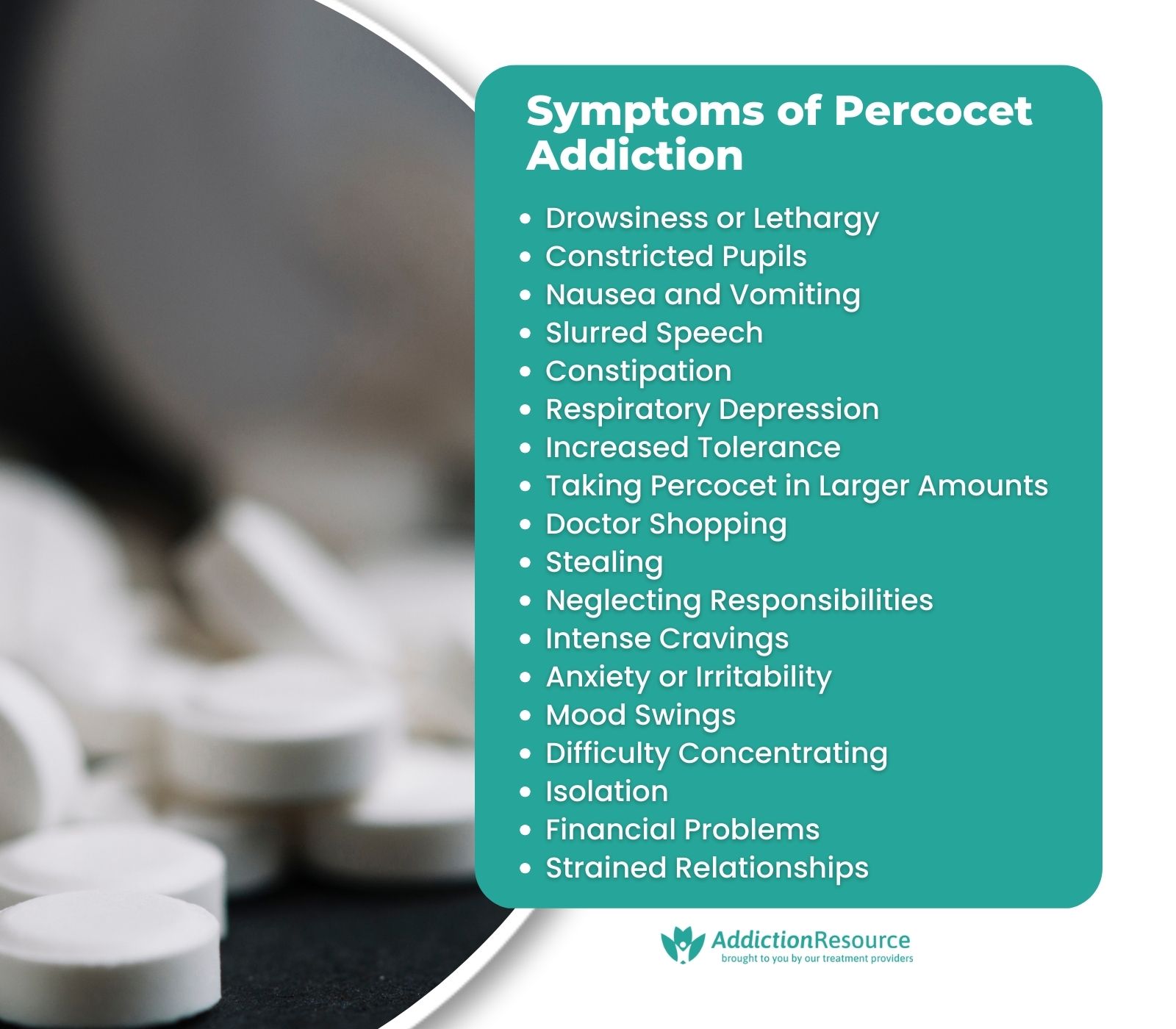
The symptoms of Percocet addiction are as follows:
- Drowsiness or Lethargy: Individuals addicted to Percocet exhibit excessive drowsiness or a persistent state of lethargy. This occurs because oxycodone, the opioid component in Percocet, depresses the central nervous system, leading to sedation. According to Healthline in “Percocet Addiction,” over time, the body becomes accustomed to the drug’s presence, and users find it challenging to stay alert or maintain energy levels. This symptom significantly impairs daily functioning and overall quality of life.
- Constricted Pupils: A physical sign of opioid use, including Percocet, is pinpoint pupils. Oxycodone stimulates the parasympathetic nervous system, causing the pupils to constrict. This symptom is noticeable during intoxication and persists with ongoing use. In cases of overdose, severe pupil constriction occurs, necessitating immediate medical attention.
- Nausea and Vomiting: Many individuals abusing Percocet experience gastrointestinal issues, notably nausea and vomiting, according to a study by Grunkemeier DM, Cassara JE, Dalton CB, and Drossman DA. et al. 2007, in “The narcotic bowel syndrome: clinical features, pathophysiology, and management.” Oxycodone affects the brain’s chemoreceptor trigger zone, which induces these symptoms. While common during initial use, with continued abuse, the body does not develop tolerance to these effects, leading to persistent discomfort. These symptoms also manifest during withdrawal, as the body reacts to the absence of the drug.
- Slurred Speech: Slurred speech is a noticeable symptom in those misusing Percocet. The depressant effects of oxycodone slow down neural activity, impairing motor functions necessary for clear articulation. This leads to difficulties in communication and is mistaken for other conditions, such as alcohol intoxication. Chronic misuse exacerbates this issue, affecting social interactions and professional responsibilities.
- Constipation: Opioid-induced constipation is a prevalent issue among Percocet users. Oxycodone binds to receptors in the gastrointestinal tract, reducing bowel motility. Unlike other side effects, tolerance to constipation does not develop, meaning the symptom persists or worsens with continued use. This leads to significant discomfort and requires medical intervention if not properly managed. Opioid-induced constipation (OIC) accounts for between 40% and 60% of patients receiving opioids, according to a study by Sizar O, Genova R, Gupta M. et al. 2023, titled “Opioid-Induced Constipation.”
- Respiratory Depression: One of the most dangerous effects of Percocet abuse is respiratory depression. Oxycodone suppresses the brainstem’s respiratory centers, leading to slowed or shallow breathing. This effect is dose-dependent and is fatal, especially when combined with other central nervous system depressants like alcohol or benzodiazepines. Recognizing this symptom is necessary, as it requires immediate medical attention, according to a study by Baldo BA, Rose MA. et al. 2022, titled “Mechanisms of opioid-induced respiratory depression.”
- Increased Tolerance: Over time, individuals abusing Percocet develop tolerance, requiring higher doses to achieve the same effects. This occurs because the body becomes accustomed to the presence of the drug, diminishing its efficacy. Increased tolerance leads to escalating use, heightening the risk of overdose and deepening physical dependence.
- Taking Percocet in Larger Amounts: As tolerance builds, users consume larger quantities of Percocet than prescribed or intended. This behavior is addiction, reflecting a loss of control over drug use. Such escalation not only increases the risk of adverse effects but also signifies the progression of the substance use disorder.
- Doctor Shopping: To obtain more Percocet, individuals engage in “doctor shopping,” visiting multiple healthcare providers to secure additional prescriptions. This deceptive practice is illegal and underscores the compulsive nature of addiction. It also poses challenges for healthcare systems in monitoring and preventing prescription drug abuse.
- Stealing: In desperation to maintain their supply, some individuals resort to stealing medication from others or engaging in theft to fund their drug use. This behavior reflects the profound impact of addiction on moral and ethical decision-making, leading to legal consequences and strained relationships.
- Neglecting Responsibilities: Addiction leads to a decline in fulfilling personal and professional obligations. Individuals neglect work, school, or family duties as obtaining and using Percocet becomes their primary focus. This neglect results in job loss, academic failure, and deteriorating family dynamics.
- Intense Cravings: A defining feature of addiction is the experience of intense cravings for the substance. These overwhelming urges to use Percocet dominate an individual’s thoughts, making it challenging to focus on anything else. Cravings are powerful drivers of continued use and persist even after periods of abstinence, contributing to relapse.
- Anxiety or Irritability: Emotional disturbances, such as heightened anxiety or irritability, are common among those addicted to Percocet. These feelings arise both during active use and withdrawal periods. The drug’s impact on brain chemistry disrupts normal emotional regulation, leading to mood instability. During withdrawal, the absence of the drug exacerbates these symptoms as the body readjusts.
- Mood Swings: Mood swings are a common symptom of Percocet addiction, characterized by sudden and extreme shifts in emotional states, according to Healthline in “Percocet Addiction: Symptoms, Treatments and More.” These changes in mood range from irritability to euphoria without an apparent trigger. The fluctuation is due to the way oxycodone alters brain chemistry, particularly affecting the areas responsible for emotional regulation. As the drug’s effects wear off, withdrawal exacerbates mood instability, making users more prone to emotional swings. This symptom leads to increased conflict in social and personal relationships.
- Difficulty Concentrating: Individuals with Percocet addiction experience difficulty concentrating, which manifests as an inability to focus on tasks or remember details. Oxycodone’s impact on the brain’s cognitive function, especially in the areas related to attention and memory, results in reduced mental clarity and cognitive impairment. As the drug’s effects wear off, withdrawal symptoms further contribute to brain fog and difficulty maintaining focus. This symptom significantly hinders daily activities and negatively affects professional and academic performance.
- Isolation: Isolation is another of Percocet’s addictions. As the addiction deepens, individuals withdraw from social interactions, friends, and family. This isolation is driven by feelings of shame, guilt, or fear of being judged due to their drug use. The individual’s overwhelming focus on obtaining and using Percocet leads them to prioritize the drug over social connections. This behavioral change worsens over time, leaving the individual disconnected from their support system, further exacerbating the addiction.
- Financial Problems: Financial problems arise for individuals addicted to Percocet due to the high cost of obtaining the drug. As the addiction progresses, users spend large sums of money to maintain their supply, leading to significant financial strain. This results in borrowing money, draining savings, or even engaging in illegal activities to fund the addiction. The impairment in work performance caused by the addiction further contributes to financial instability. These problems become severe, leading to debt, bankruptcy, or criminal charges.
- Strained Relationships: Percocet addiction places significant stress on relationships with family, friends, and romantic partners. The compulsive nature of drug use, along with mood swings and emotional instability, cause conflict and distrust. Individuals addicted to Percocet lie or steal to feed their habit, leading to feelings of betrayal and resentment among loved ones. As the addiction takes priority, the individual neglects their responsibilities, further eroding relationships. Over time, these issues result in relationship breakdowns and long-lasting emotional damage.
Why is Percocet Addictive?
Percocet is addictive because it contains oxycodone, a powerful opioid that binds to mu-opioid receptors in the brain, producing pain relief and euphoria. This euphoric effect reinforces repeated use, leading to physical dependence and addiction. According to the National Institute on Drug Abuse (NIDA), approximately 2.7 million people in the U.S. suffered from opioid use disorder in 2020, with prescription opioids like Percocet playing a significant role.
Long-term use alters brain chemistry, increasing tolerance and requiring higher doses to achieve the same effects, which further fuels addiction. The Drug Enforcement Administration (DEA) classifies oxycodone as a Schedule II controlled substance due to its high potential for abuse and dependence. Even short-term use leads to dependency, with withdrawal symptoms such as cravings, anxiety, and nausea reinforcing continued use.
How Long Does it Take to Become Addicted to Percocet?
It takes as little as 2 to 4 weeks to get addicted to Percocet, depending on dosage, frequency, and individual factors. Addiction develops when a person takes Percocet beyond the prescribed duration or in higher doses than recommended. For example, doctors prescribe Percocet, which is used for acute pain management for a duration of 7 to 14 days, at doses such as 5 mg/325 mg every 6 hours as needed.
However, taking it daily for longer periods or exceeding the prescribed dose, such as taking 10 mg instead of 5 mg or increasing frequency to every 4 hours, accelerates dependence. Women develop addiction faster than men due to differences in body composition and metabolism, while men require higher doses to feel the same effects, increasing their risk of misuse.
What is the Withdrawal Timeline for Percocet?
The withdrawal timeline for Percocet lasts one to two weeks, with an average duration of 7 to 10 days. Symptoms usually begin within 6 to 12 hours after the last dose, peak around 72 hours, and gradually subside over the following days. Factors such as dosage, duration of use, and individual metabolism affect withdrawal severity and length. Women experience a slightly longer withdrawal period due to hormonal differences affecting opioid metabolism, while men might experience more intense physical symptoms. Certain factors, such as medical detox, hydration, nutrition, and tapering off the drug under medical supervision, help reduce the duration and severity of withdrawal.
What are the Causes of Percocet Addiction?
The causes of Percocet addiction are chronic pain, misuse, genetics, family history, mental health disorders, peer pressure, easy access, and stress coping. Addiction develops when individuals take Percocet beyond medical necessity or in higher doses than prescribed, leading to dependence and compulsive use. Various biological, psychological, and environmental factors contribute to the likelihood of addiction.
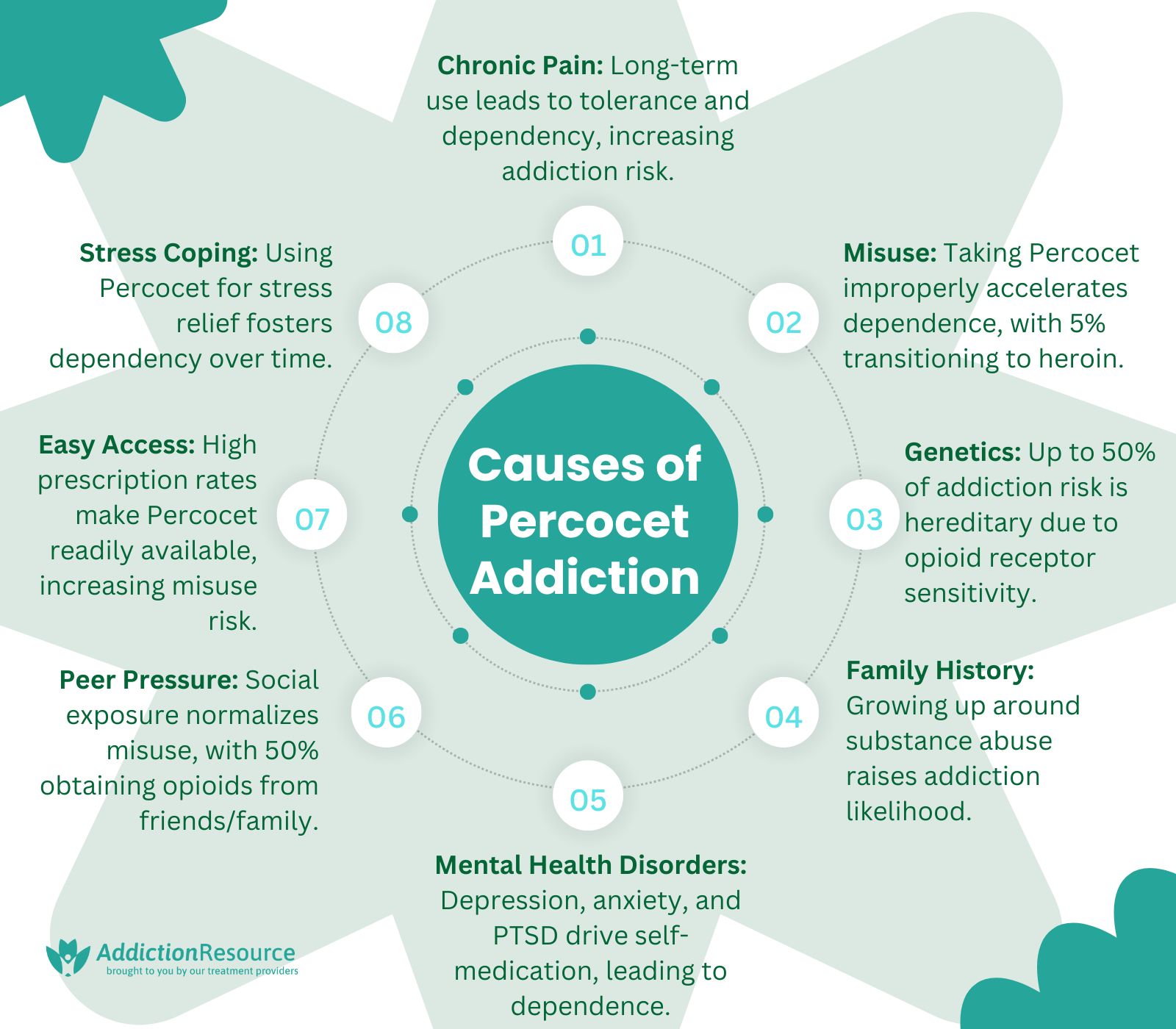
The causes of Percocet addiction are detailed below:
- Chronic Pain: People prescribed Percocet for chronic pain develop dependence over time as their body builds tolerance, requiring higher doses for the same relief. This prolonged use increases the risk of addiction, especially for those with long-term conditions such as arthritis or post-surgical pain. According to the CDC, long-term opioid therapy is a significant risk factor for opioid use disorder.
- Misuse: Taking Percocet in larger doses, more frequently than prescribed, or through non-medical routes (such as crushing and snorting) accelerates dependence. The National Institute on Drug Abuse (NIDA) reports that about 5% of people who misuse prescription opioids transition to heroin use due to increased tolerance and dependency.
- Genetics: Genetics plays an integral role in addiction susceptibility. A study by Berrettini W. et al. 2017, in “A brief review of the genetics and pharmacogenetics of opioid use disorders,” suggests that up to 50% of a person’s risk for opioid addiction is hereditary, as genes influence opioid receptor sensitivity and dopamine regulation. This means individuals with a genetic predisposition experience stronger cravings and a higher risk of dependence.
- Family History: Individuals with a family history of substance abuse are more likely to develop an addiction to Percocet. Growing up in an environment where drug use is normalized or where parental substance abuse is present increases the likelihood of opioid misuse. A study in JAMA Psychiatry found that children of opioid-dependent parents were more prone to developing addiction themselves.
- Mental Health Disorders: Conditions such as depression, anxiety, and PTSD increase the risk of Percocet addiction. Many individuals with mental health disorders turn to opioids for emotional relief, leading to self-medication and eventual dependence. According to a study by Goldner EM, Lusted A, Roerecke M, Rehm J, Fischer B. et al. 2014, titled “Prevalence of Axis-1 psychiatric (with focus on depression and anxiety) disorder and symptomatology among non-medical prescription opioid users in substance use treatment: systematic review and meta-analyses,” 43% of people in SUD treatment for nonmedical use of prescription painkillers have a diagnosis or symptoms of mental health disorders, particularly depression and anxiety.
- Peer Pressure: Social influences contribute to Percocet addiction, particularly among young adults and teens. Exposure to friends or family members misusing opioids normalizes non-medical use. According to the National Survey on Drug Use and Health (NSDUH), nearly 50% of people who misuse prescription painkillers obtain them from friends or relatives.
- Easy Access: The widespread availability of Percocet through prescriptions, illicit sales, or theft makes addiction more likely. Many individuals begin using opioids legally but later seek unauthorized sources as tolerance builds. The CDC notes that in 2019, over 142 million opioid prescriptions were written in the U.S., increasing accessibility.
- Stress Coping: Some individuals use Percocet as a way to manage stress, whether from work, relationships, or personal struggles. The temporary relief opioids provide creates a cycle of dependency, where users turn to the drug whenever they experience distress. The American Psychological Association warns that stress-induced substance use is a leading contributor to opioid addiction.
What are the Effects of Percocet Addiction?
The effects of Percocet addiction include euphoria, drowsiness, constipation, nausea, respiratory depression, impaired coordination, dependence, mood swings, cognitive impairment, and financial difficulties. Chronic misuse alters brain chemistry, leading to compulsive drug-seeking behavior and long-term health risks. These effects severely impact daily life, relationships, and overall well-being.
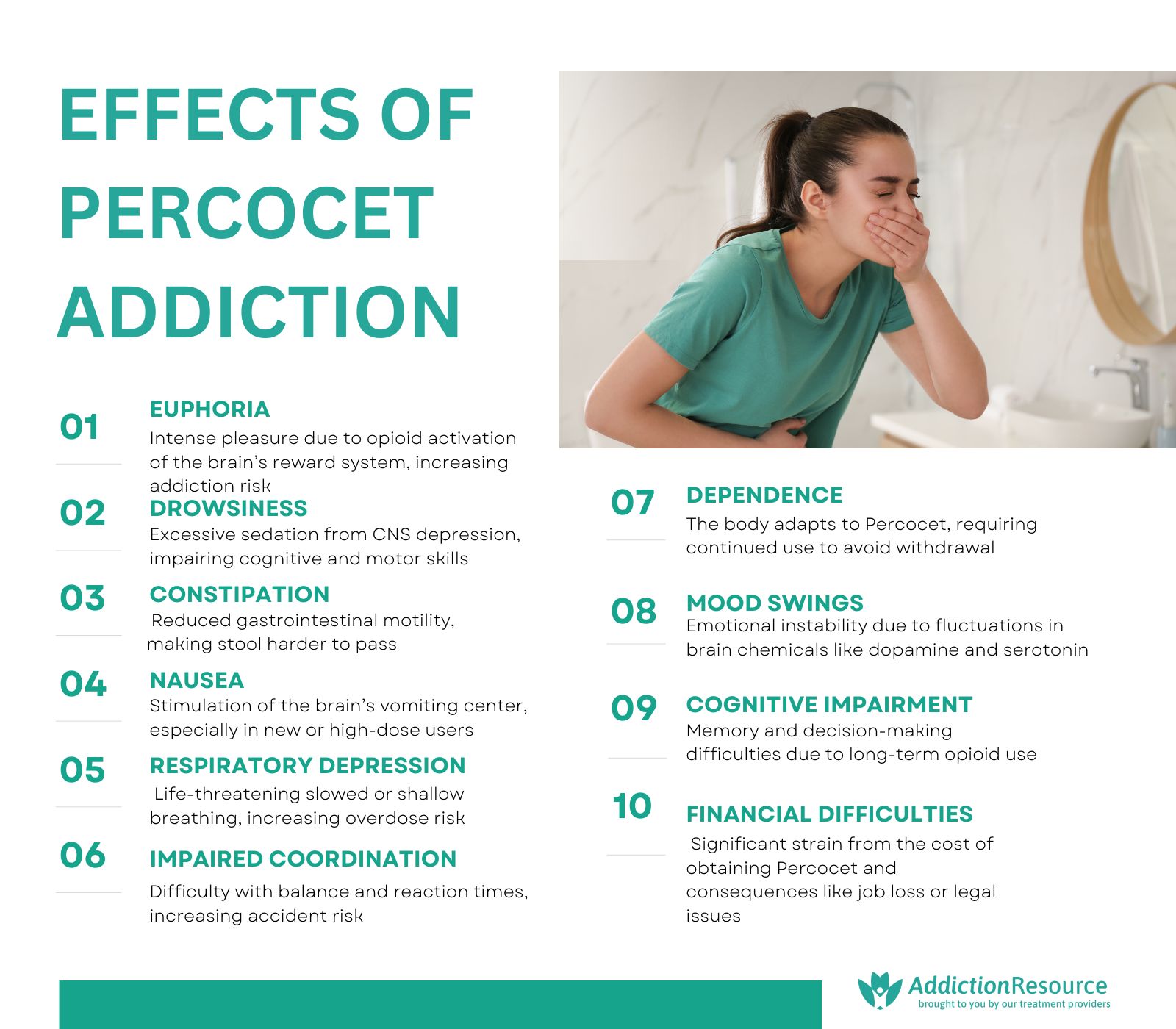
The effects of Percocet addiction are as follows:
- Euphoria: Euphoria is an intense feeling of pleasure or well-being caused by oxycodone’s activation of opioid receptors in the brain. This artificial dopamine surge reinforces continued use, increasing the risk of addiction. According to the National Institute on Drug Abuse (NIDA), repeated exposure to opioids alters the brain’s reward system, making natural pleasure less satisfying.
- Drowsiness: Drowsiness, or excessive sedation, occurs because opioids depress the central nervous system (CNS), slowing brain activity. This impairs cognitive and motor functions, making daily tasks dangerous, especially driving. A study by Rogers E, Mehta S, Shengelia R, Reid MC., et al. 2013, titled “Four Strategies for Managing Opioid-Induced Side Effects in Older Adults,” found that opioid-induced drowsiness affects nearly 60% of long-term users.
- Constipation: Opioids slow gastrointestinal motility, leading to constipation, one of the most common side effects. This happens because opioid receptors in the gut reduce peristalsis, making stool harder to pass. According to a study by Mesía R, Virizuela Echaburu JA, Gómez J, Sauri T, Serrano G, Pujol E., et al. 2019, titled “Opioid-Induced Constipation in Oncological Patients: New Strategies of Management” reports that up to 90% of opioid users experience opioid-induced constipation (OIC).
- Nausea: Nausea results from opioids stimulating the brain’s chemoreceptor trigger zone (CTZ), which controls vomiting. This side effect is particularly common in new users or those taking high doses. According to The Journal of Pain, about 25-30% of opioid users report nausea, with some requiring anti-nausea medications.
- Respiratory Depression: Respiratory depression, a life-threatening effect, occurs when opioids suppress signals from the brainstem that control breathing. This leads to slow or shallow breathing, oxygen deprivation, or overdose. The CDC states that opioid overdose deaths, primarily due to respiratory depression, accounted for over 80,000 fatalities in 2021.
- Impaired Coordination: Percocet affects motor function by depressing the CNS, leading to impaired coordination, dizziness, and an increased risk of falls or accidents. Opioid users exhibit slower reaction times and poor balance, similar to alcohol impairment.
- Dependence: Dependence develops when the body adapts to Percocet, requiring continued use to avoid withdrawal symptoms. This occurs due to neurochemical changes in the brain, particularly within the opioid and dopamine systems. Research in JAMA Psychiatry shows that physical dependence develops in as little as two weeks of continuous opioid use.
- Mood Swings: Mood swings arise due to fluctuations in dopamine and serotonin levels caused by opioid use. Users experience emotional instability, irritability, or depression when not taking the drug. According to a study by Semenkovich K, Chockalingam R, Scherrer JF, Panagopoulos VN, Lustman PJ, Ray JM, Freedland KE, Svrakic DM. et al. 2014, titled “Prescription Opioid Analgesics Increase Risk of Major Depression: New Evidence, Plausible Neurobiological Mechanisms and Management to Achieve Depression Prophylaxis,” opioid-dependent individuals are at higher risk for mood disorders, including major depression.
- Cognitive Impairment: Long-term Percocet use affects memory, decision-making, and attention due to opioid-induced changes in brain function. Chronic exposure to oxycodone impairs prefrontal cortex activity, which governs rational thinking. A Harvard Medical School study by Zortea, M., Beltran, G., Alves, R.L. et al. 2021, titled “Spectral Power Density Analysis of the resting-state as a Marker of the Central Effects of opioid use in Fibromyalgia” found that opioid users score lower on cognitive function tests than non-users.
- Financial Difficulties: Addiction leads to significant financial strain due to the high cost of obtaining Percocet, legal consequences, or job loss. Many individuals prioritize drug use over responsibilities, leading to debt, theft, or economic instability.
How to Treat Percocet Addiction?
To treat Percocet addiction, a combination of medical and behavioral interventions is required. Treatment methods include medical detoxification, counseling, support groups, medication-assisted treatment (MAT), behavioral therapy, and inpatient or outpatient rehabilitation programs. These approaches help manage withdrawal symptoms, address psychological dependence, and support long-term recovery.
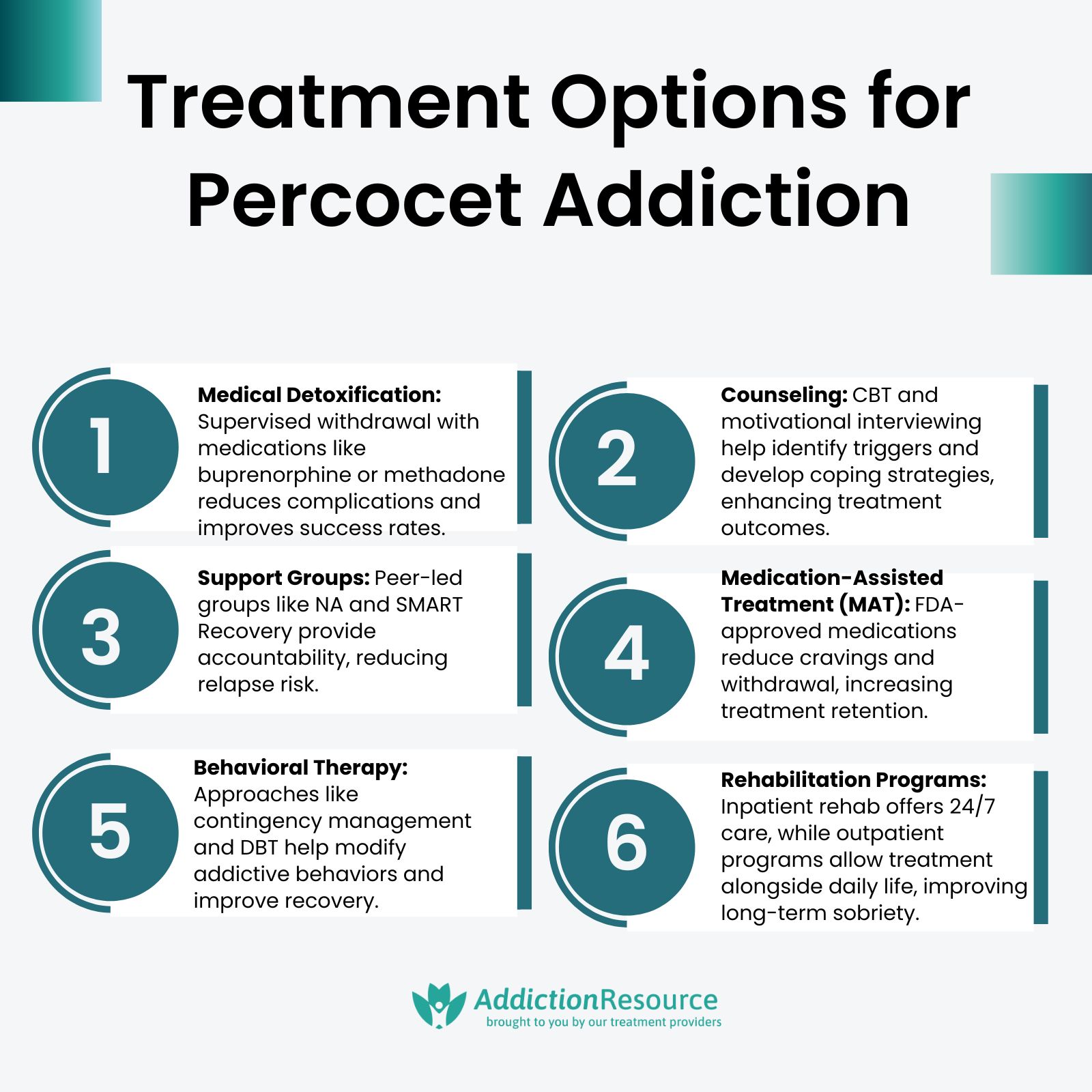
To treat Percocet addiction, the following methods are employed:
- Medical Detoxification: Medical detoxification is the supervised process of removing Percocet from the body while managing withdrawal symptoms. It is conducted in a clinical setting where medications such as buprenorphine or methadone are used to ease symptoms. A study by Guenzel N, McChargue D., et al. 2023, titled “Addiction Relapse Prevention,” shows that medically supervised detox reduces complications by up to 68% and increases successful completion rates by 40%.
- Counseling: Counseling, including cognitive-behavioral therapy (CBT) and motivational interviewing, helps individuals identify triggers and develop coping strategies. Therapy sessions are conducted individually or in groups. Research by McHugh RK, Hearon BA, Otto MW. et al. 2010, titled “Cognitive behavioral therapy for substance use disorders,” suggests that counseling significantly improves treatment outcomes when combined with other interventions.
- Support Groups: Support groups like Narcotics Anonymous (NA) and SMART Recovery provide peer-led support and accountability. These groups offer a structured environment for individuals to share experiences and receive encouragement. Participation in support groups reduces relapse rates by promoting a sense of community and ongoing motivation.
- Medication-Assisted Treatment (MAT): MAT involves using FDA-approved medications such as buprenorphine, methadone, or naltrexone to reduce cravings and withdrawal symptoms. According to the National Institute on Drug Abuse (NIDA), titled “The Science of Addiction Treatment and Recovery,” MAT has been shown to increase treatment retention and lower the risk of relapse by 50%.
- Behavioral Therapy: Behavioral therapy, including contingency management and dialectical behavior therapy (DBT), helps individuals modify harmful behaviors associated with addiction. These approaches focus on reward-based reinforcement and emotional regulation. Carroll KM, Onken LS. et al. 2005, in their study titled “Behavioral therapies for drug abuse,” found that behavioral therapy significantly improves recovery outcomes.
- Inpatient or Outpatient Rehabilitation Programs: Inpatient rehabilitation provides 24/7 medical care in a controlled environment, while outpatient programs allow individuals to receive treatment while maintaining daily responsibilities. The choice depends on addiction severity. The Substance Abuse and Mental Health Services Administration (SAMHSA) reports that structured rehab programs improve long-term sobriety rates.
Can You Overdose on Percocet?
Yes, it is possible to overdose on Percocet by exceeding the recommended dosage. Taking more than prescribed, such as over 40 mg of oxycodone per day, significantly increases overdose risk. Percocet contains oxycodone, a potent opioid that causes severe respiratory depression, leading to unconsciousness, coma, or death. The combination of oxycodone and acetaminophen also increases the risk of liver toxicity when taken in excess. According to the CDC titled “U.S. Overdose Deaths In 2021,” opioid overdoses accounted for over 80,000 deaths in 2021, with oxycodone being a major contributor.
What is Percocet?
Percocet is a prescription pain reliever that combines oxycodone, a potent semisynthetic opioid, with acetaminophen, a non-opioid analgesic. It is primarily used for managing moderate to severe pain when non-opioid medications are insufficient. Oxycodone works by binding to opioid receptors in the brain and spinal cord, altering pain perception, while acetaminophen enhances pain relief and reduces fever.
Percocet is available in various dosages, with each tablet containing 2.5 mg, 5 mg, 7.5 mg, or 10 mg of oxycodone hydrochloride combined with 325 mg of acetaminophen. The medication is taken orally in tablet form every 4 to 6 hours as needed for pain relief. Due to its opioid content, Percocet carries a high risk of dependence, misuse, and overdose, especially when taken in higher doses or through non-prescribed methods such as crushing, snorting, or injecting.
What Happens if You Take Too Much Percocet?
If you take too much Percocet, you experience an overdose, which is life-threatening. Symptoms of overdose include slowed or labored breathing, extreme drowsiness, confusion, and loss of consciousness. In severe cases, an overdose leads to respiratory failure, coma, or death. It’s important to seek immediate medical attention if these symptoms occur.
Can Percocet Cause an Overdose?
Yes, Percocet can cause an overdose because it contains oxycodone, a potent opioid. Taking too much oxycodone, especially in combination with acetaminophen, overwhelms the body’s ability to process the drug, leading to dangerously slowed breathing, heart rate, and impaired consciousness. This results in respiratory failure, which is a major cause of death in opioid overdoses.
What is the Difference Between Percocet and Vicodin?
The main difference between Percocet and Vicodin is that Percocet contains oxycodone, while Vicodin contains hydrocodone. Both are opioid pain relievers but differ in their potency and chemical structure. Percocet is considered stronger than Vicodin due to oxycodone’s more potent effects. While both medications are used for similar purposes, managing moderate to severe pain, they differ in their addictive potential, with oxycodone (Percocet) being more addictive. Both drugs are commonly prescribed for pain relief, but their differing chemical compositions make Percocet slightly more prone to misuse and addiction.
Is Percocet an Opioid?
Yes, Percocet is an opioid because it contains oxycodone, which is a semi-synthetic opioid derived from thebaine, a natural opiate. Oxycodone works by binding to opioid receptors in the brain, altering pain perception and leading to feelings of euphoria and relaxation. This makes Percocet as effective for pain relief as opioids but also increases its potential for abuse and addiction.
How Does Percocet Addiction Compare to Other Opioid Addictions?
Percocet is compared to other opioid addictions because of its addictive potential and impact on the brain’s reward system. Fentanyl Addiction is considered more dangerous due to its potency and the ease of overdose. Fentanyl is 50 to 100 times stronger than morphine and even a small overdose results in death. This makes fentanyl addiction more lethal, as users are more likely to overdose unknowingly due to its high potency. While Percocet addiction shares similar physical dependence effects, fentanyl’s greater toxicity leads to higher overdose risks and a faster progression of addiction.
Heroin addiction shares many similarities with Percocet addiction, as both are opioid-based and act on the same receptors in the brain. However, the key difference is that heroin is obtained illegally, increasing the risks of contamination, inconsistent potency, and legal consequences. Percocet, on the other hand, is a prescription medication that, when misused, leads to addiction. Heroin use also has more immediate euphoric effects compared to Percocet, but both substances lead to physical dependence and withdrawal symptoms like anxiety, muscle pain, and sweating. The illicit nature of heroin makes it harder to control dosage, and users are at a higher risk of overdose.
Vicodin addiction involves hydrocodone, another opioid, which is less potent than oxycodone, the active ingredient in Percocet. While both Percocet and Vicodin are prescribed for pain management, oxycodone in Percocet is stronger and has a higher potential for abuse. Vicodin addiction, though severe, develops at a slower rate than Percocet addiction due to hydrocodone’s weaker euphoric effects. However, both substances cause physical dependence and addiction, and the withdrawal symptoms are quite similar. The presence of acetaminophen in both Percocet and Vicodin increases the risk of liver damage when used excessively.
Morphine addiction shares several characteristics with Percocet addiction, as both are opioid medications used to manage severe pain. However, morphine is administered in a hospital or clinical setting, whereas Percocet is prescribed for home use. Morphine addiction involves a quicker development of tolerance and dependence due to its higher potency compared to the hydrocodone in Vicodin but lower than oxycodone in Percocet. Withdrawal symptoms for both morphine and Percocet are similar, including sweating, chills, anxiety, and muscle pain. However, morphine’s long-acting form makes it more difficult for users to manage cravings and taper off without professional support.
How is Percocet Addiction Diagnosed by Medical Professionals?
Percocet addiction is diagnosed by medical professionals based on a comprehensive evaluation, including an assessment of the individual’s medical history, usage patterns, and behavioral signs of substance misuse. Common diagnostic criteria include increased tolerance, withdrawal symptoms, compulsive use, and neglect of responsibilities. Healthcare providers use standardized screening tools like the DSM-5 criteria to assess the severity of addiction and determine the best course of treatment.
What Medications Are Used to Treat Percocet Addiction?
Medications that are used to treat Percocet addiction include methadone, buprenorphine, and naltrexone. These medications help reduce cravings, manage withdrawal symptoms, and block the euphoric effects of opioids. Methadone and buprenorphine are opioid agonists or partial agonists, meaning they activate opioid receptors to a lesser extent, helping to stabilize individuals and prevent relapse. Naltrexone, an opioid antagonist, blocks opioid effects entirely and is used once the withdrawal has been managed.
Is it Safe to Stop Using Percocet Abruptly?
No, it is not safe to stop using Percocet abruptly due to the risk of withdrawal symptoms, which are severe and potentially dangerous. Withdrawal includes symptoms such as anxiety, nausea, sweating, and muscle pain. Gradual tapering under medical supervision is recommended to minimize withdrawal risks and ensure a safer recovery process.
Can Percocet Addiction Exacerbate Existing Mental Health Disorders?
Yes, Percocet addiction can exacerbate existing mental health disorders, according to a study by the National Institute of Mental Health titled “Substance Use and Co-Occurring Mental Disorders.” Opioid addiction is linked to co-occurring conditions like depression, anxiety, and PTSD. The effects of Percocet, including euphoria followed by periods of emotional instability, worsen mental health symptoms, making it harder for individuals to manage both their addiction and mental health challenges effectively. This is why integrated treatment approaches that address both addiction and mental health are needed.

 FindTreatment.gov