

 Edit by: Brittni
 Written by:
Dilaudid is a brand name of the potent semisynthetic opiate hydromorphone. As the name suggests, it’s a form of Morphine and hence an opiate. In legal terms, it’s classified as a narcotic. Currently, they use Dilaudid as well as Oxycodone to treat moderate to severe pain. This is often in patients where other painkillers (including other opiates) have stopped working. It is commonly prescribed to treat post-surgery pain. In addition, they may prescribe it to treat chronic non-cancer related pain. Is it addictive? What are the Dilaudid addiction signs and symptoms to look for? Is there help?
Other brand names for the drug include Exalgo, Dilaudid-5, and Palladone. Hydromorphone is such a potent analgesic that the state of Ohio approved its use in 2009. They use it as a backup measure for conducting state executions. This is when other drugs fail to produce a lethal injection.
Table of Contents

Dilaudid Dependency Risks
With systematic use, users of the opioid hydromorphone are prone to form a physical dependency on the drug. Dilaudid acts on the central nervous system’s μ-opioid receptors. As a result, it produces analgesic effects, primarily by reducing pain.
With regular use, the central nervous system adapts its functioning. This is to accommodate the drug as the body compensates for the fine balance in brain chemistry necessary for normal functioning. When the CNS has completely adapted to the presence of the drug, the user is no longer able to function normally without it. As a result, one can classify them to be drug dependent.
The company gives a black box warning against physical and psychological dependency on Dilaudid. This is in the product monograph included in the drug’s packaging.
Has one developed a physical dependency on Dilaudid? Has one acquired tolerance for the drug? Then, carefully consider the possibility that one may become an addict. Long term users of opiates are at very real danger of substance addiction. However, what are the Dilaudid addiction signs?
Potential Dilaudid Addiction – Signs and Symptoms
Narcotics Anonymous provides a list which may indicate the Dilaudid addiction signs and symptoms:
- Abdominal pain
- Cardiac arrest
- Circulatory suppression (poor blood circulation)
- Constipation
- Difficulty breathing
- Drowsiness
- Fainting
- Lightheadedness
- Nausea
- Sleep apnea (trouble breathing while sleeping, or intermittently stopping breathing altogether)
- Signs of injecting (usually on arms or legs)
- Trouble urinating
- Vomiting
In some cases, withdrawal itself is one of the indicators of an opioid use disorder. However, one needs to consider various other factors before one can establish an addiction.
Medical & Behavioral Criteria for Detecting Dilaudid Addiction
The DSM-5 (or Diagnostic and Statistical Manual) expands on how doctors check for dependency. Furthermore, it shows where dependency has crossed over into addiction. In most cases, the previous DSM-IV made a clear distinction between opioid dependence and opioid abuse. However, the updated medical understanding of the relationship between these distinct conditions now factors in the complex nature of dependency and addiction.
DSM-5 codes classify different types and subtypes of opioid dependence vs. opioid abuse under F11.1-F11.99, which include:
- Withdrawal
- Mood disorder
- Intoxication (including delirium, perceptual disturbances)
- Sleep disorder
- Psychotic disorder (including delusions, hallucinations)
- Sexual dysfunction
If any of the above are so severe that it requires medical treatment, it could be an indicator of an opioid use disorder. The main distinction between the use and abuse of Dilaudid resides in the patient’s relationship with the substance. As a result, it may be a way to tell some Dilaudid addiction signs and symptoms.
Sometimes, more than one of these signs are present in the user’s behavior.
As a result, it may indicate an opioid use disorder, as detailed in the DSM-5 checklist for these conditions:
- Are any of the symptoms of opioid withdrawal present?
- Is it necessary to take Dilaudid to avoid withdrawal?
- Have they failed in an attempt to quit or a persistent desire to quit Dilaudid?
- Are they using the drug for a much longer period than the original script specified?
- Have they increased the dosage substantially since the original script?
- Are they using Dilaudid more regularly than prescribed?
- Is Dilaudid taken for reasons other than relieving the physical pain? (i.e. recreationally)
- Is the user experiencing cravings for the drug?
- Are they taking greatly increased doses to achieve similar effects? (which indicate a tolerance for the drug)
- Does using Dilaudid impact negatively on the user’s career or personal life?
- Are they using Dilaudid in spite of the problems caused by personal relationships?
- Have they bought the drug from illicit sources or via the internet without a script?
- Are they using another patient’s script to fill a prescription?
- Is Dilaudid used by smoking or snorting it, or any other way that isn’t prescribed by a doctor?
- Have they ever used the drug in potentially dangerous situations, for instance, while driving?
- Does the use of Dilaudid cause the user to spend less time at work or social or recreational activities?
- Are there any signs of poly-drug use or abuse? (including alcohol)
Dilaudid Addiction as a form of Opioid Addiction
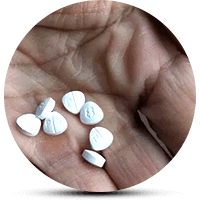
The past two decades have seen a massive increase in the use of prescription opioids. In fact, it has more than quadrupled – even though there is no corresponding increase in the use of heroin. Health experts attribute this phenomenon to the now widespread availability of these drugs online and via the normal healthcare channels. Sometimes, one opioid gets recalled or becomes commercially unavailable. Then, users simply find a replacement under a different brand name or a chemically similar composition.
Dilaudid addiction signs and symptoms show just one type of opioid abuse. Narcotics Anonymous provides an outline to users and their families for the telltale signs:
- Coming across as nervous, disorganized or jittery
- Lack of concentration
- Feelings of elation and great relaxation that seem out of place
- Excessive time away from work
- Apathy towards personal grooming and appearance
- Poly-opioid use (where there is the use of multiple brands or types of opioids)
- Using heroin in addition to or as a substitute for Dilaudid
- Needing to cover up arms or legs to stop injection marks (‘track marks’) from showing
- Property belonging to the user/family/friends going missing
- Seemingly unexplainable ‘extra’ cash or too little cash
- Supporting the addiction by selling drugs
- Becoming involved in crime
Page Sources
- Dilaudid - highlights of prescribing information. U.S. Food And Drug Administration. https://www.accessdata.fda.gov/drugsatfda_docs/label/2016/019891s024,019892s029lbl.pdf
- Padma Gulur, Katharine Koury, Paul Arnstein, Hang Lee, Patricia McCarthy, Christopher Coley, Elizabeth Mort. Morphine versus Hydromorphone: Does Choice of Opioid Influence Outcomes? Pain Research and Treatment Volume 2015. https://www.ncbi.nlm.nih.gov/pmc/articles/PMC4644543/
- Shram MJ, Sathyan G, Khanna S, Tudor IC, Nath R, Thipphawong J, Sellers EM. Evaluation of the abuse potential of extended release hydromorphone versus immediate release hydromorphone.Journal of Clinical Psychopharmacology. 2010. https://www.ncbi.nlm.nih.gov/pubmed/20075644

 FindTreatment.gov